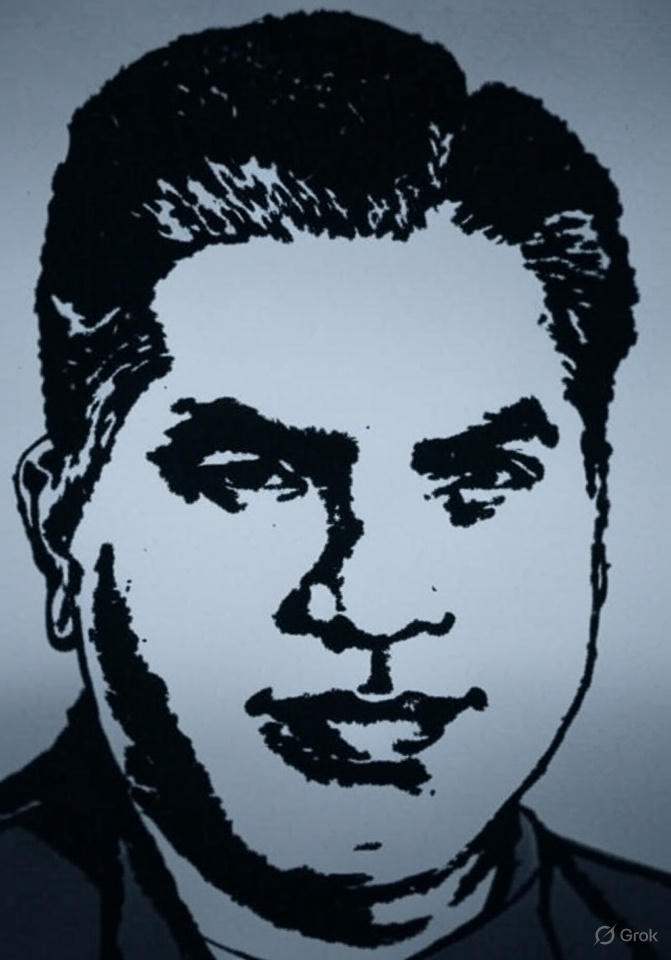

Dr. Ramanatham: A Revolutionary Doctor Remembered on His 40th Death Anniversary
Warangal, September 3, 2025 – Forty years ago, a man who dedicated his life to the poor and the oppressed fell to police bullets in a shocking act of retribution. That man was Dr. A. Ramanatham, a doctor by profession but a human rights crusader at heart. As the state vice-president of the Andhra Pradesh Civil Liberties Committee (APCLC), he became a symbol of defiance against police atrocities and a voice for the voiceless. On his 40th death anniversary, his extraordinary journey continues to inspire generations of activists and civil rights defenders.
From a Village Childhood to a Life of Struggle
Born on October 16, 1933, in the remote village of Mushtikuntla in Khammam district, Ramanatham grew up in modest circumstances. Yet, his hunger for knowledge propelled him to Gandhi Medical College, Hyderabad, where his life took a decisive turn. Under the mentorship of Dr. Rajagopalan, a communist leader and veteran of the Telangana Armed Struggle, Ramanatham was drawn to radical thought. The uprisings of Naxalbari and Srikakulam further shaped his ideology, awakening in him a deep conviction that medicine and revolution could walk hand in hand.
A Doctor for the People
After completing his medical education, Ramanatham briefly worked as a government doctor. But disillusioned by corruption and unethical practices in the system, he resigned in 1968 and opened the Praja Vaidyashala in Warangal. This was no ordinary clinic—it became a refuge for the poor: rickshaw pullers, daily wage workers, and even police families who could not afford treatment. For them, Dr. Ramanatham was not just a physician but a savior who healed with compassion and dignity.
Medicine Meets Revolution
In the 1970s, while practicing at Kakatiya Medical College, Ramanatham became deeply involved with radical students and progressive writers. He published Maoist literature, ran a bookstore called Shramika Varga Prachuranalu, and became an active member of Virasam (Revolutionary Writers’ Association). His services extended beyond hospitals—he ventured into the forests of Eturunagaram and Mulugu, secretly treating injured Naxalites, a decision that brought him under police surveillance.
During the Emergency in 1976, he was arrested and subjected to brutal torture in a secret detention center alongside fellow Virasam activists. After his release, he became a key figure in the reconstituted APCLC in 1978, eventually rising to the post of state vice-president. He not only led fact-finding missions on fake encounters and custodial deaths but also organized relief efforts during the 1977 Diviseema cyclone and authored a widely used Medical Guide for rural activists.

Clash with the State
By the early 1980s, Warangal had turned into a battleground, with widespread police repression, fake encounters, and atrocities against villagers. Dr. Ramanatham fearlessly investigated these cases, documenting abuses and publishing reports that exposed state excesses. His credibility and determination attracted the attention of legal luminaries like Justice Bhargava and political thinkers like Professor Rajni Kothari, who supported his missions. He even exposed the brutal killing of a party organizer in Peesara village, carried out by landlords with state backing.
The Assassination
But his courage came at a cost. On September 2, 1985, Sub-Inspector Yadagiri Reddy was killed in Kazipet. The very next day, as a funeral procession for the officer was underway, plainclothes policemen stormed into Dr. Ramanatham’s Warangal clinic. Without warning, they shot him dead with a service revolver. It was a cold-blooded execution, meant to silence a man who had become the conscience of the civil rights movement.
Yet, in a deeply symbolic moment, even police families—whom he had once treated free of cost—joined the thousands who walked in his funeral procession, paying tribute to the man who had served humanity without bias.
An Enduring Legacy
Dr. Ramanatham’s assassination only strengthened the APCLC, giving the civil rights movement in Andhra Pradesh and Telangana new energy. Leaders like K.G. Kannabiran hailed him as a “milestone” in the struggle for justice. His life continues to stand as proof that medicine can be a weapon of compassion, and activism a form of healing for society.
Forty years later, his legacy is not confined to history books. For young activists, Dr. Ramanatham remains a guiding light—an enduring reminder that the fight for human rights demands both courage and sacrifice.
“Without warriors like Dr. Ramanatham, the struggle for civil liberties would remain incomplete,” said one civil rights advocate at a memorial event today.
👉 Dr. Ramanatham’s story is not just about a doctor or an activist—it is the story of a man who dared to heal a wounded society, and in doing so, gave his life for justice.