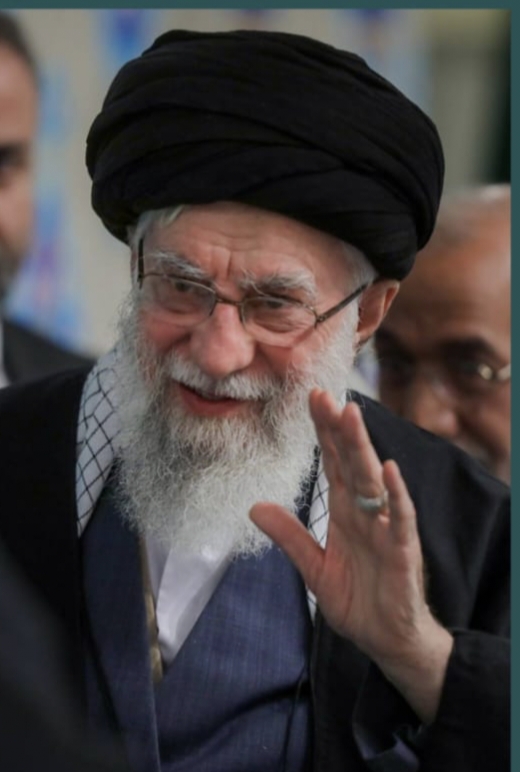

Iran’s Supreme Leader Ayatollah Ali Khamenei Assassinated in US-Israeli Airstrikes as Conflict Escalates
Tehran, Iran / Washington, USA — In a dramatic and unprecedented escalation of tensions in the Middle East, Iran’s Supreme Leader Ayatollah Ali Khamenei has been killed, Iranian state media confirmed early Sunday following a coordinated series of airstrikes by the United States and Israel targeting Tehran and other strategic sites across Iran.
The 86-year-old cleric’s death, announced by Tehran after initial claims by the US and Israeli governments, marks one of the most consequential developments in decades of hostility between Iran and Western powers.
President Donald Trump, speaking from his Mar-a-Lago residence in Florida, said the strikes were aimed at crippling Iran’s nuclear and missile capabilities and called Khamenei’s death “the single greatest chance for the Iranian people to take back their country.” He said the bombardment would continue “as long as necessary” to achieve strategic objectives.
Israeli Prime Minister Benjamin Netanyahu also hailed the campaign’s impact, encouraging that key Iranian leadership—including Khamenei—had been eliminated, and vowed further military pressure.

A Leader Defined by Revolution and Power
Born Ali Hosseini Khamenei on April 19, 1939, in the pilgrimage city of Mashhad, he emerged from a modest yet devout clerical household. Khamenei entered religious study in childhood, later training in the holy seminaries of Najaf and Qom, where he became a devoted disciple of Ayatollah Ruhollah Khomeini.
After years of opposition to the Western-aligned Shah, he played an active role in the 1979 Islamic Revolution that toppled the monarchy. Rising through the ranks of the new Islamic Republic, he served as deputy defense minister, helped organize the Islamic Revolutionary Guard Corps (IRGC), and twice held the presidency in the 1980s.
In 1989, after Khomeini’s death, Khamenei was chosen by Iran’s Assembly of Experts as Supreme Leader—a post that made him commander-in-chief of all military forces and the final authority on all state affairs, from foreign policy to judicial decisions. Critics often highlighted that the constitution was amended to enable his appointment despite his status below the highest clerical rank.
Over nearly four decades, he maintained strict control over Iranian politics, suppressing dissent—most notably during the 2009 Green Movement and the 2022 Mahsa Amini protests—and fostering hardline policies toward the United States, Israel, and regional rivals.
The Strike and Its Aftermath
The US-Israeli military operation, described by some outlets as “Operation Epic Fury,” unleashed hundreds of airstrikes on February 28, hitting government ministries, military installations, and nuclear facilities. International observers reported heavy explosions rocking Tehran and other major cities.
Iran’s Red Crescent and state media reported significant civilian casualties, including dozens of children killed in strikes on schools and residential areas—figures that deeply alarmed human rights advocates. One independent report documented an attack on an elementary school in Minab that killed dozens of pupils.
In retaliation, Iran launched missiles and drones at US bases and allied positions across the Gulf region, with explosions reported in Bahrain, Dubai, Kuwait and Qatar as tensions surged dangerously higher.
Iranian officials and the Islamic Revolutionary Guard Corps condemned the strikes as a “barbaric act of war,” promising decisive vengeance. State television described Khamenei as a figure who “stood among his people to confront global arrogance,” framing his death as martyrdom.
Global Reactions and Future Risks
Governments around the world reacted with a mixture of alarm and calls for de-escalation. The United Nations urged restraint, warning the Middle East could be plunged into a wider conflict with grave global consequences.
Analysts say the assassination removes a central axis of Iran’s political structure, leaving a power vacuum with uncertain succession. Iran’s constitution provides for the Assembly of Experts to appoint a new leader, but deep factional divisions within the regime could complicate that process.
The impact on oil markets, international diplomacy and regional alliances is expected to be profound, and global leaders are now urging restraint while preparing for potential further military escalations.
Mojtaba Khamenei Named Iran’s New Supreme Leader After Father’s Death

Following the death of Iran’s Supreme Leader Ali Khamenei, a major leadership transition has taken place in the country. Iranian authorities have announced his second son, Mojtaba Khamenei, as the new Supreme Leader and successor to his father. With Mojtaba assuming the nation’s highest position, the development is seen as a significant political shift, and the international community is closely watching how he will shape Iran’s foreign, defense, and nuclear policies.