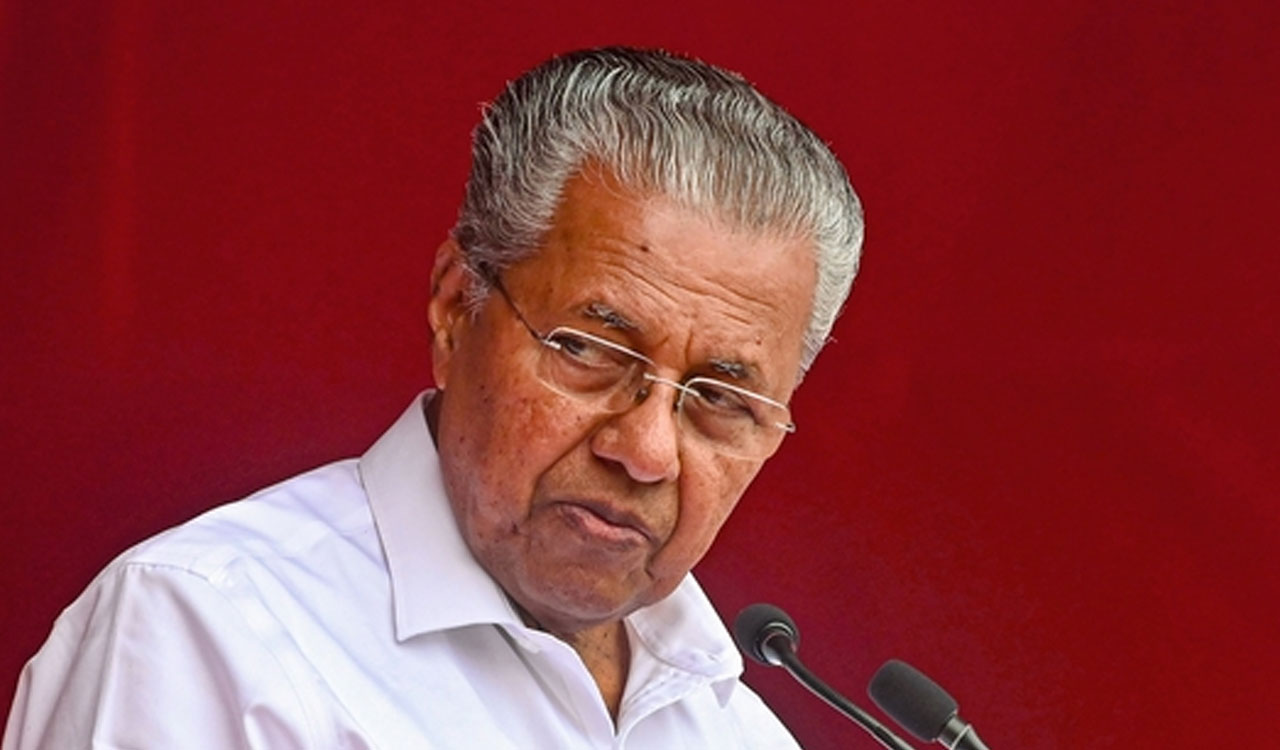
End of an Era in Kerala: Pinarayi Vijayan Resigns After Historic LDF Defeat
Thiruvananthapuram, May 4: Bringing the curtain down on a defining chapter in Kerala politics, Chief Minister Pinarayi Vijayan on Monday night submitted his resignation to Governor Rajendra V. Arlekar, hours after the CPI(M)-led Left Democratic Front suffered a crushing electoral defeat in the 2026 Assembly elections.
The Governor accepted the resignation and requested Vijayan to continue as caretaker Chief Minister until a new government is sworn in.
Historic Mandate for UDF
In a decisive verdict, the Congress-led United Democratic Front secured a sweeping victory, winning 102 seats in the 140-member Assembly. The LDF was reduced to just 35 seats, while the Bharatiya Janata Party made modest gains, winning three seats — its best-ever performance in the state.
The outcome marks not only a change of government but also the end of a decade-long LDF rule under Vijayan, who had been in power since 2016 and became the state’s longest-serving Chief Minister with two consecutive terms.
End of Left’s Last Bastion
The verdict carries national significance, effectively leaving India without a single Left-led state government for the first time in over five decades. Following earlier electoral setbacks in states like West Bengal and Tripura, Kerala had remained the last major stronghold of the Left.
The scale of the defeat has raised serious questions about governance, anti-incumbency, and the LDF’s connect with voters after ten uninterrupted years in office.
Anti-Incumbency and Governance Questions
Vijayan’s tenure was marked by a mix of strong administrative decisions and persistent controversies. He was widely credited for handling crises such as successive floods and the COVID-19 pandemic. However, his leadership style — often seen as centralised and uncompromising — drew criticism from the Opposition.
Corruption allegations and governance-related concerns also appeared to have eroded public trust, contributing to the scale of the electoral setback.
The results reflect deep voter dissatisfaction, with 13 out of 21 Cabinet ministers losing their seats — a striking indicator of anti-incumbency sentiment across the state.
UDF’s Resurgence
The UDF’s comeback was spearheaded by Leader of the Opposition V. D. Satheesan, who led a focused campaign combining sharp criticism of the government with promises of administrative reform.
The Indian National Congress recorded its highest-ever tally in Kerala, winning 63 seats. The alliance successfully consolidated support among women, youth, and even sections of traditional Left voters.
Senior leaders including Rahul Gandhi and Priyanka Gandhi Vadra added momentum to the campaign, though analysts note that booth-level mobilisation and localised strategies played a decisive role.
Erosion of Left Strongholds
The election also saw the collapse of several traditional Left bastions. Regions such as Kannur, long regarded as ideological strongholds of the CPI(M), witnessed unexpected reverses.
Further underscoring internal challenges, several former Left leaders, including G. Sudhakaran, T.K. Govindan, and V. Kunjikrishnan, secured victories outside the party fold, highlighting fractures within the Left’s core base.
Even Vijayan, though he retained his seat, experienced a significant drop in his winning margin and briefly trailed during early counting rounds — an unusual development in what was once considered a safe constituency.
BJP’s Incremental Gains
The BJP’s three-seat victory marks a gradual but notable expansion in Kerala’s political space. Wins by leaders such as Rajeev Chandrasekhar, B.B. Gopakumar, and V. Muraleedharan point to growing traction in urban pockets, indicating a slow shift away from the state’s traditionally bipolar contest.
What Lies Ahead
As the LDF begins a period of introspection, attention is turning to Vijayan’s next political move. Given his stature within the party and legislative experience, there is speculation that he could assume the role of Leader of the Opposition in the new Assembly.
For the UDF, the massive mandate presents both an opportunity and a challenge — to deliver on promises of governance reform and meet heightened public expectations.
A Political Watershed
The 2026 Kerala Assembly verdict represents more than a routine transfer of power. It signals a structural shift in voter behaviour, with the electorate prioritising governance, accountability, and credibility over ideological continuity.
Vijayan’s resignation, coming just weeks before his 82nd birthday, marks the end of an era that reshaped Kerala’s political trajectory — one that began with historic promise and concludes with an equally historic setback.
In sum, Kerala has not merely elected a new government; it has redefined the contours of state and national politics, closing a significant chapter in India’s Left movement.