New Delhi, July 17: Elon Musk-backed Tesla has struggled to establish a strong presence in India’s premium electric vehicle (EV) market, selling fewer than 500 vehicles during its first year of operations, according to industry data.
Tesla entered the Indian market on July 15, 2025, and began customer deliveries of its Model Y electric SUV in September 2025. Between September 2025 and June 2026, the company retailed 450 vehicles, averaging fewer than 50 units per month.
The performance trails significantly behind established luxury automobile brands. During the same period, BMW sold 3,433 vehicles, while Mercedes-Benz retailed 1,116 units, highlighting the challenges Tesla faces in gaining market share despite its strong global reputation.
Industry analysts attribute Tesla’s slow start to a combination of factors, including its single-product strategy, premium pricing, and limited retail presence across the country.
Currently, Tesla offers only the Model Y in India. The electric SUV was launched at an introductory ex-showroom price of ₹59.89 lakh, which was later reduced to ₹50.89 lakh in May 2026. However, the vehicle continues to be imported as a Completely Built Unit (CBU), making it subject to high import duties that keep prices significantly higher than in many global markets.
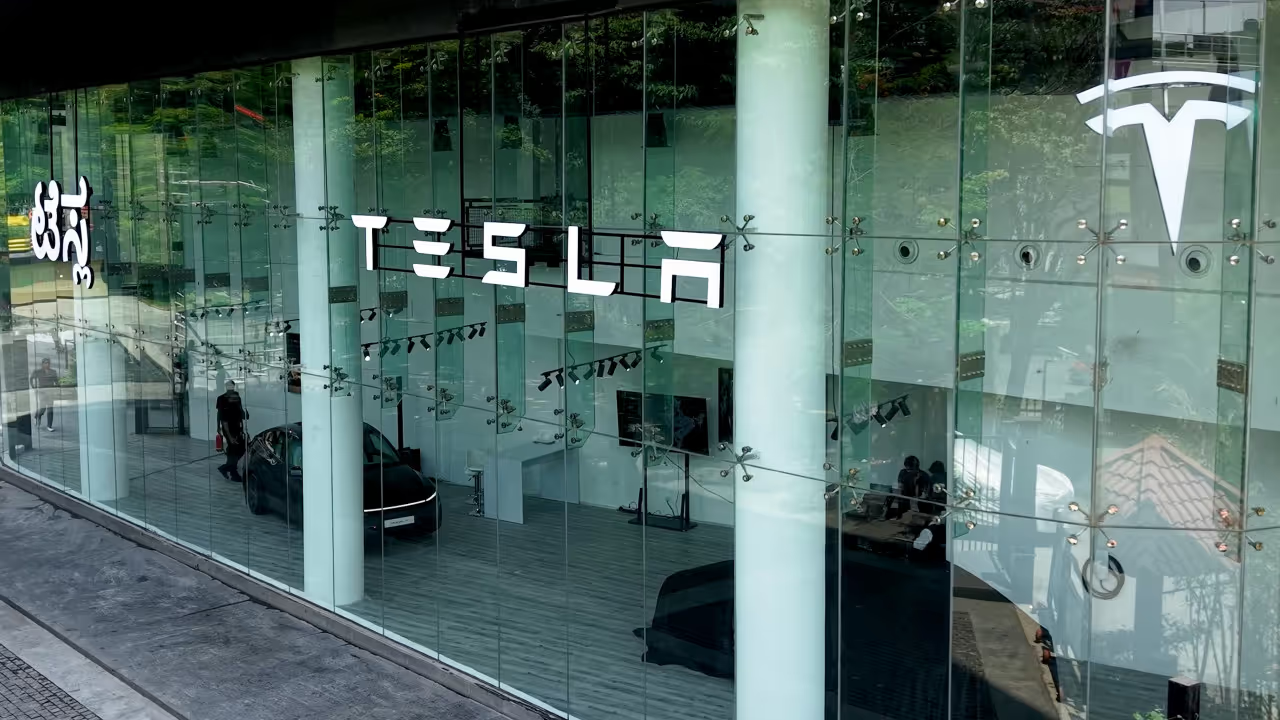
Tesla’s physical footprint in India also remains relatively small. The company operates just five Experience Centres, while rivals such as BMW and Mercedes-Benz have developed extensive dealership and after-sales service networks over several years.
Despite the slow sales, Tesla has continued expanding its infrastructure in India. The company recently launched North India’s first in-mall charging facility at Nexus Select CityWalk in New Delhi, featuring six 11-kW AC destination chargers that allow customers to charge their vehicles while shopping or dining.
In June 2026, Tesla also opened its fifth Experience Centre in Hyderabad’s HITEC City, where customers can explore the new 2026 Model Y Premium Rear-Wheel Drive and Model Y L.
While Tesla continues to strengthen its presence through new showrooms and charging infrastructure, industry observers believe the company may need a broader product portfolio, local manufacturing, and a wider sales and service network to significantly improve its performance in India’s rapidly evolving EV market.