
Laboratory tests flag bromate and potentially carcinogenic chemicals; company disputes findings, maintains product safety
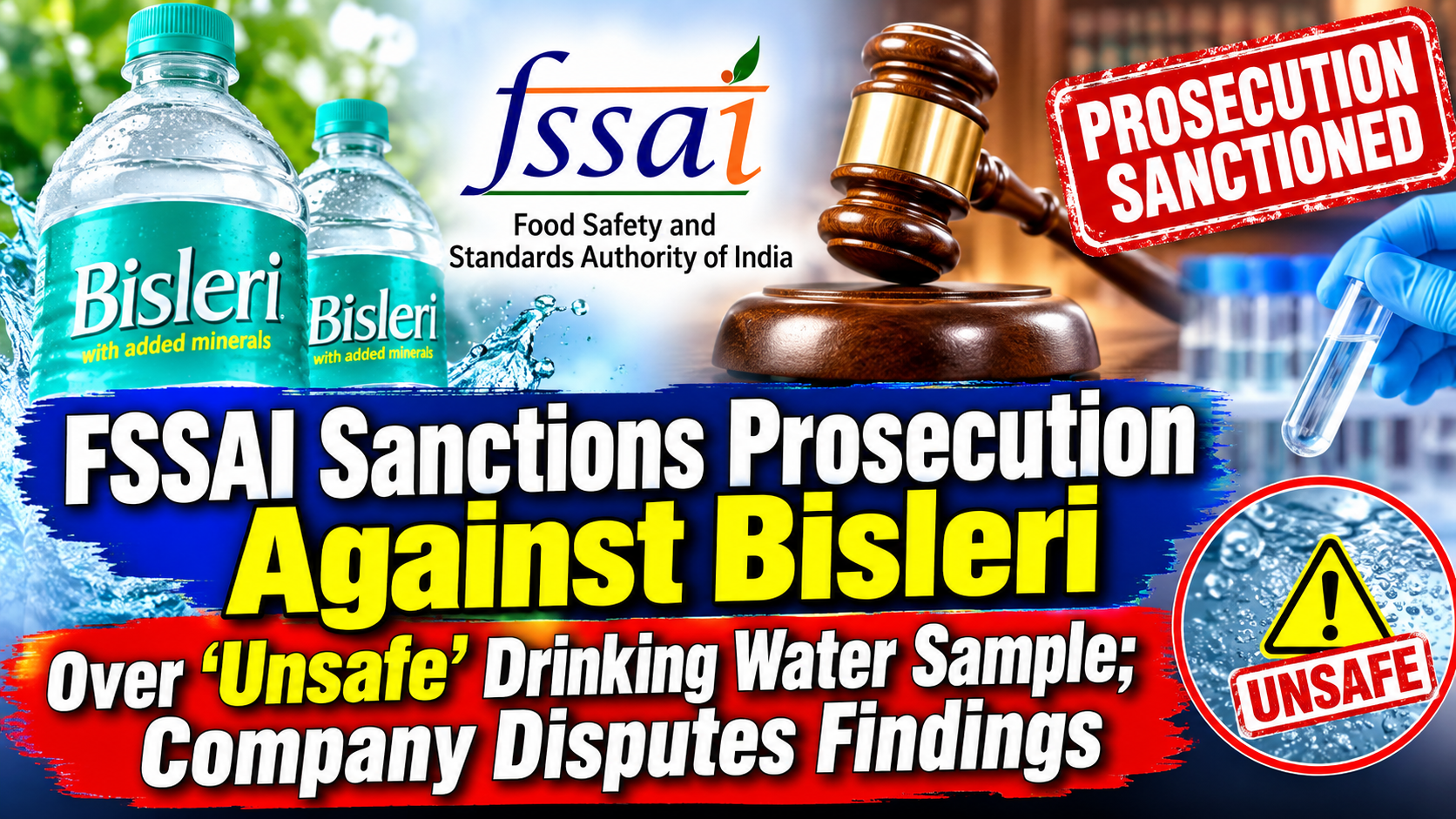
NEW DELHI: The Food Safety and Standards Authority of India (FSSAI) has sanctioned prosecution against Bisleri International Pvt. Ltd. under the Food Safety and Standards Act, 2006, following laboratory findings that a sample of the company’s packaged drinking water was unsafe for consumption. The regulatory action has brought renewed attention to quality-control standards, laboratory testing procedures and consumer safety in India’s packaged drinking water industry.
According to the reported laboratory findings, an initial examination detected bromate at 12 micrograms per litre (µg/L), exceeding the prescribed maximum permissible limit of 10 µg/L. Although a subsequent examination by a referral laboratory reportedly found bromate levels within the permissible limit, it separately flagged the presence of polycyclic aromatic hydrocarbons (PAHs), a group of chemical compounds that includes several substances classified as carcinogenic.
The findings prompted the food safety regulator to initiate prosecution-related proceedings against the company. However, the sanction for prosecution does not amount to a conviction. The allegations will have to be established through the legal process, and the company will have an opportunity to contest the findings.
BISLERI QUESTIONS LABORATORY FINDINGS
Responding to the regulatory action, Bisleri International disputed the test findings and maintained that its products comply with applicable food safety standards. The company clarified that the matter concerns a particular batch manufactured at its Goa facility in September 2025 and does not establish that all its products or batches are unsafe.
According to the company’s account, FSSAI officials collected six samples from the Goa manufacturing facility on September 30, 2025. Bisleri stated that five of the six samples reportedly complied with the applicable standards. The sixth sample was subsequently referred for further examination following an appeal submitted by the company on November 22, 2025.
Bisleri said the referral laboratory found bromate levels within the prescribed limit but raised concerns over the presence of PAHs. Questioning the findings, the company arranged independent testing of the sample at an FSSAI-approved laboratory. The independent examination reportedly confirmed that bromate concentrations were within the permissible limit.
The company further stated that it submitted the independent laboratory report to FSSAI’s Western Regional Office on February 2, 2026. However, it claimed that it had not received any further communication on the matter. Bisleri also maintained that it had not received the reported prosecution-related notice either through email or in physical form.
WHAT ARE BROMATE AND PAHs?
Bromate is a chemical compound that can form during the ozonation of drinking water, particularly when bromide naturally present in the source water reacts with ozone during the treatment process. Drinking-water standards prescribe strict limits for bromate because prolonged exposure to elevated concentrations can pose health risks.
Polycyclic aromatic hydrocarbons (PAHs) are a group of chemicals formed mainly during the incomplete combustion of organic materials. They can also enter the environment through industrial processes and contamination. Certain PAHs are recognised as carcinogenic, although the health risk depends on the specific compound, concentration and duration of exposure.
The detection of these substances in a drinking-water sample therefore requires careful scientific assessment, including confirmation of the compounds identified, their concentrations and compliance with applicable regulatory limits.
REGULATORY SCRUTINY AND CONSUMER SAFETY
Under the Food Safety and Standards Act, 2006, FSSAI is responsible for regulating food safety and ensuring that food products available in the market comply with prescribed standards. Packaged drinking water manufacturers are required to follow applicable quality-control, hygiene, processing, testing and labelling requirements.
The regulatory framework provides for inspection, sample collection, laboratory analysis and legal action in cases involving alleged violations. Companies can also challenge laboratory findings through the prescribed appeal and referral-testing mechanisms.
Bisleri reiterated that consumer safety remains its priority and stated that its manufacturing operations involve more than 90 quality checks across 10 stages. The company said it would cooperate with the regulatory authorities and continue to defend its position through the appropriate channels.
The case has raised questions about the interpretation of laboratory results, the handling of referral samples and communication between regulators and manufacturers. While FSSAI’s prosecution sanction reflects the regulator’s action based on the reported laboratory findings, Bisleri has questioned those findings and cited an independent test report in support of its position.
The final outcome will depend on the evidence placed before the competent legal forum. Until the matter is adjudicated, the prosecution sanction should not be treated as a judicial finding of guilt.