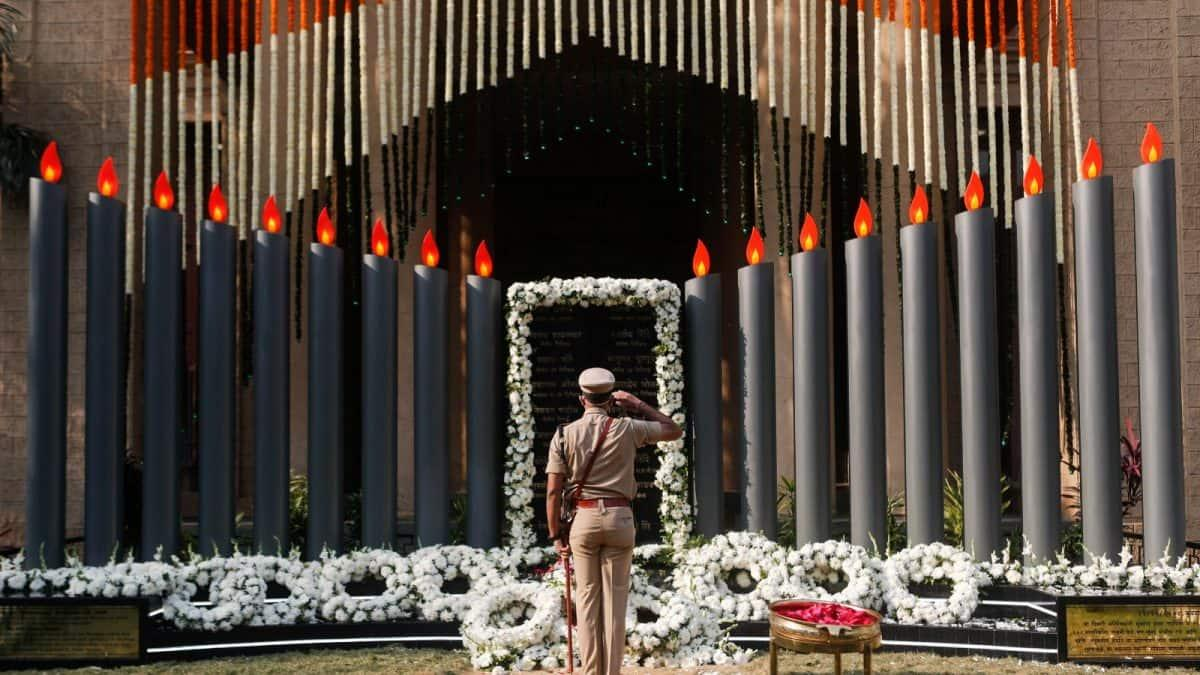
India remembers the victims and brave security personnel who lost their lives in the 26/11 Mumbai terror attacks, as the country marks the 18th anniversary of the horrific incident on November 26, 2026. The coordinated attacks, which shook the financial capital of the country in 2008, remain one of the darkest chapters in India’s history.
On the night of November 26, 2008, ten heavily armed terrorists belonging to the Pakistan-based Lashkar-e-Taiba (LeT) entered Mumbai by sea and launched coordinated attacks at several prominent locations across the city. The attacks continued for nearly 60 hours, leaving 166 people dead and more than 300 injured.
The terrorists targeted several crowded and prominent locations, including Chhatrapati Shivaji Terminus (CST) railway station, the iconic Taj Mahal Palace Hotel, Oberoi-Trident Hotel, Leopold Cafe and Nariman House. Gunfire, explosions and hostage situations plunged Mumbai into chaos, while television networks broadcast the unfolding tragedy across the world.
One of the most tragic incidents occurred at CST railway station, where innocent passengers were indiscriminately targeted. The Taj Mahal Palace Hotel became another major battleground, with guests and employees trapped inside as security forces fought to eliminate the attackers.
The Mumbai Police, Army, Navy’s Marine Commandos and National Security Guard (NSG) personnel launched operations to rescue hostages and neutralise the terrorists. The NSG operation, named ‘Operation Black Tornado’, continued until November 29, when the final terrorists at the Taj Hotel were eliminated.
The attacks also claimed the lives of several brave police officers, including Maharashtra Anti-Terrorism Squad (ATS) chief Hemant Karkare, Additional Commissioner of Police Ashok Kamte and encounter specialist Vijay Salaskar. Police constable Tukaram Omble also made the supreme sacrifice while helping capture terrorist Ajmal Kasab alive.
Of the ten terrorists involved in the attacks, nine were killed by security forces, while Ajmal Kasab was captured alive. He was subsequently tried, convicted and executed on November 21, 2012.
The 26/11 attacks exposed serious gaps in India’s coastal and internal security arrangements and prompted significant changes in the country’s counter-terrorism infrastructure. The deployment of NSG regional hubs and improvements in coastal surveillance were among the measures taken to strengthen national security.
Eighteen years later, November 26 remains a day of remembrance for the innocent victims, courageous police officers and security personnel who sacrificed their lives in the line of duty. Their courage and sacrifice continue to remind the nation of the importance of vigilance, unity and the fight against terrorism.
India pays tribute to all those who lost their lives in the 26/11 Mumbai terror attacks.