
Thailand-Cambodia Border Conflict Escalates with Heavy Fighting and Thai Airstrikes
BANGKOK/PHNOM PENH, July 24, 2025 – Tensions along the Thailand-Cambodia border have erupted into intense military clashes, with both nations accusing each other of initiating hostilities. The conflict, centered around disputed territories near the ancient Ta Moan Thom temple, has resulted in casualties on both sides, including civilians, and prompted Thailand to deploy F-16 fighter jets to conduct airstrikes on Cambodian military targets.
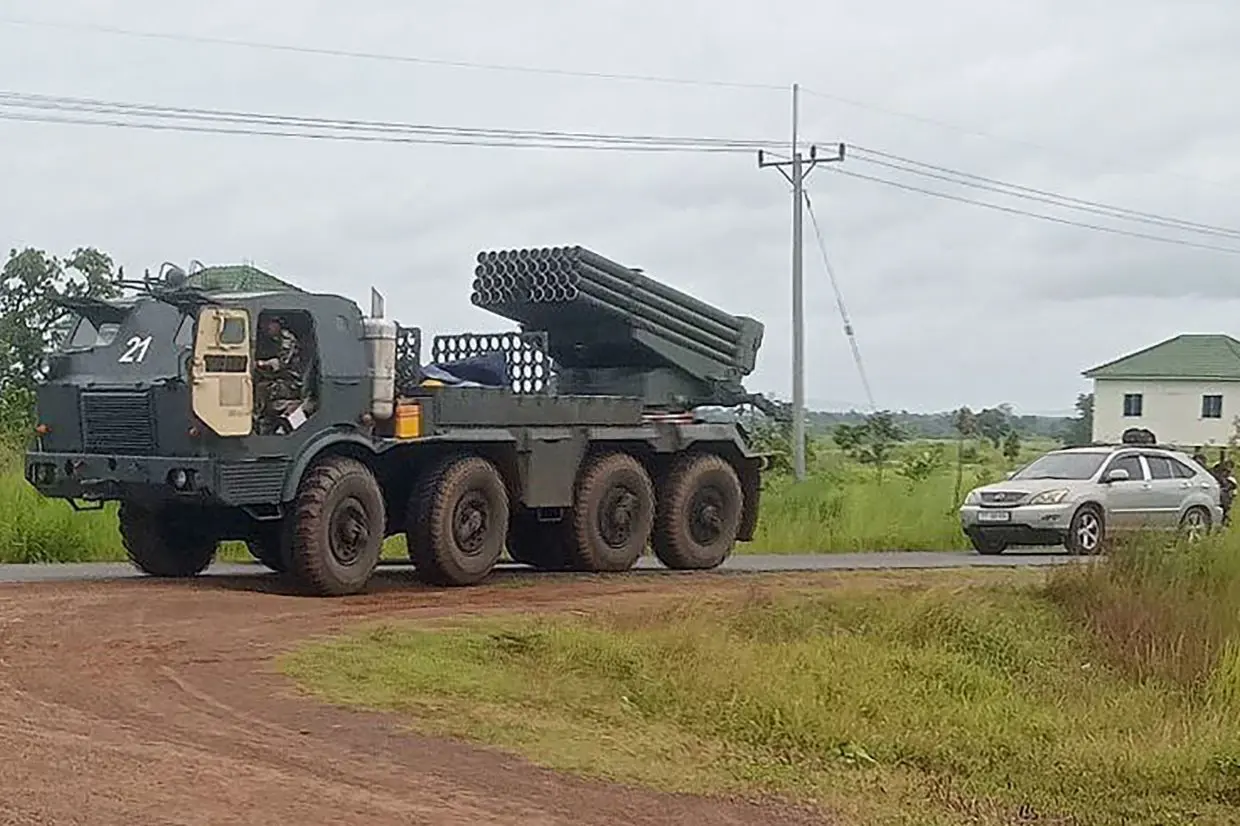
According to the Thai military, Cambodian forces fired heavy artillery, including BM-21 Grad rockets, at a Thai military base and civilian areas in Surin province on Thursday morning, killing at least two Thai civilians and injuring three others, including a five-year-old boy. Thai authorities reported that the shelling targeted residential areas and a hospital, prompting the evacuation of approximately 40,000 civilians from 86 villages near the border to safer locations. “Artillery shells fell on people’s homes,” said Sutthirot Charoenthanasak, district chief of Kabcheing in Surin province, describing the devastating impact of the Cambodian attack.


In response, Thailand’s Royal Thai Air Force deployed six F-16 fighter jets, one of which conducted precision airstrikes, destroying a Cambodian military target, identified by Thai officials as a regional military support unit. “We have used air power against military targets as planned,” said Thai army deputy spokesperson Col. Richa Suksuwanon. The Thai military also reported that Cambodian forces deployed a surveillance drone and advanced with heavy weapons near the Ta Moan Thom temple, approximately 360 km from Bangkok, before opening fire, wounding two Thai soldiers.
Cambodia’s Ministry of National Defence condemned the Thai airstrikes as “unprovoked” and accused Thailand of violating an agreement aimed at de-escalating tensions. The ministry claimed that Cambodian troops were responding to an incursion by Thai forces in self-defense. Former Cambodian Prime Minister Hun Sen, father of current Prime Minister Hun Manet, stated on social media that two Cambodian provinces, Oddar Meanchey and Preah Vihear, had come under shelling from Thai forces. Hun Manet urged calm but emphasized that Cambodia had “no choice but to respond with armed forces against armed aggression.”


The clashes mark a significant escalation in a long-standing border dispute, reignited in May 2025 when a Cambodian soldier was killed in a brief firefight in the Emerald Triangle, a contested area where the borders of Thailand, Cambodia, and Laos converge. Tensions further intensified after a series of incidents, including a landmine explosion on July 16 that injured three Thai soldiers and another on July 23 that cost a Thai soldier his leg. Thailand accused Cambodia of planting the mines, a claim Phnom Penh denied, asserting that the soldiers triggered a decades-old mine by deviating from agreed routes.
Diplomatic relations have deteriorated sharply, with Thailand expelling Cambodia’s ambassador, recalling its own from Phnom Penh, and closing all northeastern border crossings. Cambodia retaliated by downgrading ties to their lowest level in years, evacuating its embassy in Bangkok, and blocking imports of fuel, gas, and agricultural products from Thailand. The Thai embassy in Phnom Penh urged its citizens to leave Cambodia immediately, citing the likelihood of prolonged and expanding conflict.

The conflict has sparked domestic political fallout in Thailand, where Prime Minister Paetongtarn Shinawatra faces criticism for her handling of the crisis. A leaked phone call with Hun Sen led to her suspension by Thailand’s Constitutional Court on July 1, fueling nationalist sentiment and anti-government protests in Bangkok. Acting Prime Minister Phumtham Wechayachai described the situation as “delicate” and emphasized adherence to international law.
International concern is growing, with China urging its citizens in Cambodia to avoid border areas and the UK advising travelers to exercise caution. The dispute, rooted in historical ambiguities from the 1904 Franco-Siamese Treaty and a 1962 International Court of Justice ruling awarding the Preah Vihear temple to Cambodia, continues to fuel nationalist fervor on both sides. Despite past efforts at diplomacy, including a 2011 agreement to withdraw troops from disputed areas, the current escalation threatens regional stability.
Both nations have called for restraint, but with military reinforcements deployed and border crossings sealed, the risk of further violence remains high. The international community is closely monitoring the situation, with Cambodia planning to seek intervention from the International Court of Justice, a move Thailand has indicated it may not recognize.