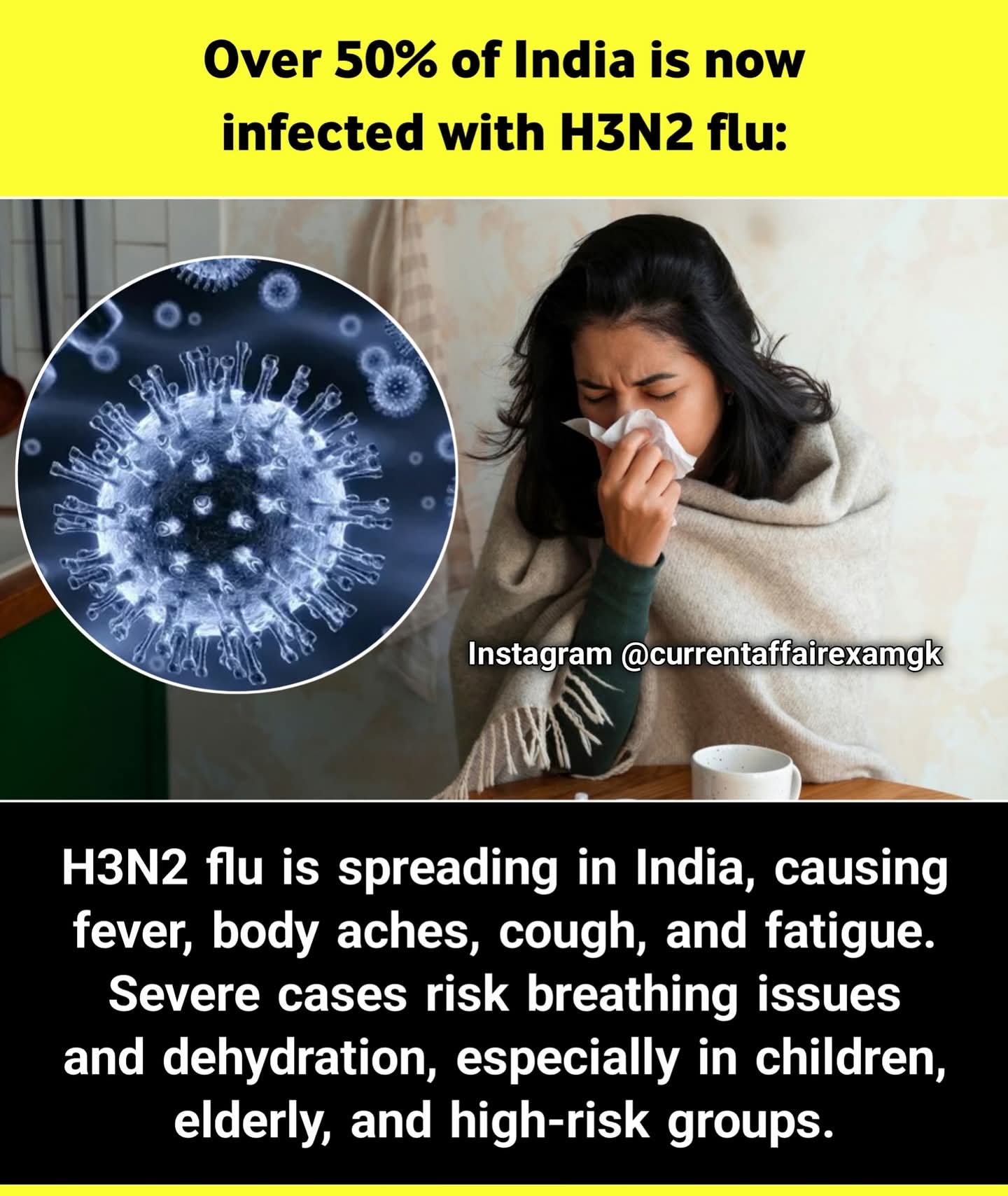

H3N2 Flu Outbreak Grips India: Delhi-NCR Sees 70% Households Affected, Cases Surge Nationwide
New Delhi, September 24, 2025 – India is battling a sharp surge of seasonal influenza, with the H3N2 strain at the center of a fast-spreading outbreak that has left hospitals struggling to cope. Surveys suggest that nearly 70% of households across Delhi-NCR are reporting flu-like symptoms, while other states including Maharashtra, Gujarat, Karnataka, and Punjab are also witnessing a rapid uptick in cases.
Health authorities have stopped short of confirming claims circulating on social media that more than half the country is currently infected. However, the Indian Council of Medical Research (ICMR) has acknowledged a significant rise compared to earlier this year, pointing to a convergence of factors such as prolonged monsoon conditions, heavy air pollution, and dense urban living that are fueling the spread.
Delhi-NCR at the Epicenter
A recent survey by LocalCircles revealed that nearly seven in ten families in Delhi, Gurugram, Noida, Faridabad, and Ghaziabad currently have at least one member sick with H3N2 symptoms. These include high fever, persistent cough, sore throat, fatigue, and body pain, with many patients reporting a recovery period stretching beyond a week.
This marks a notable escalation from March 2025, when only 54% of households in the region reported similar complaints. ICMR’s surveillance data from weeks 28 to 37 of 2025 confirm that H3N2 positivity rates have been climbing steadily, with up to 15 new infections per week detected in testing samples. Officials also flagged concurrent surges of other respiratory viruses, including RSV.
A Tougher Flu Season Than Usual
H3N2, a subtype of Influenza A, is known for its rapid mutation cycle and tendency to trigger seasonal outbreaks of varying severity. But doctors note that the current wave is producing more stubborn and prolonged symptoms than typical flu seasons.
- Fever: Spiking above 38–39°C, often resistant to routine paracetamol.
- Cough: Lingering for 2–3 weeks.
- Other symptoms: Sudden chills, muscle aches, headaches, nasal congestion, and in many cases, gastrointestinal issues such as nausea or diarrhea, especially among children.
For vulnerable groups – including children, pregnant women, the elderly, and people with chronic conditions – the illness can escalate to pneumonia, bronchitis, severe breathing difficulties, or dehydration. Hospitals report that nearly 10% of severe acute respiratory infection (SARI) cases require oxygen support, while 7% need intensive care.
Transmission Made Worse by Urban Lifestyles
Medical experts stress that H3N2 spreads through respiratory droplets and contaminated surfaces, with crowded spaces such as offices, metros, and taxis serving as super-spreaders. Pollution, post-monsoon humidity, and close-contact urban living conditions are compounding the situation.
Interestingly, doctors are noting that younger adults under 40 – particularly professionals commuting for work – appear to be disproportionately affected this year.
Treatment and Recovery
While most cases can be managed at home, early intervention is critical. Antiviral medication like oseltamivir (Tamiflu) is effective if taken within 48 hours of symptom onset, often shortening illness duration by 1–2 days and lowering the risk of complications.
Doctors advise patients not to rely solely on over-the-counter remedies. Instead, they emphasize:
- Seeking medical advice for prolonged or worsening symptoms.
- Maintaining hydration and rest.
- Practicing home isolation to avoid infecting family members.
Vaccination and Prevention: Key Lines of Defense
The Union Health Ministry has renewed calls for annual flu vaccination, particularly for high-risk groups. The quadrivalent flu vaccine currently available in India offers protection against H3N2 alongside other influenza strains.
Preventive measures recommended include:
- Frequent handwashing with soap for at least 20 seconds.
- Wearing masks in crowded areas.
- Ensuring good indoor ventilation.
- Avoiding close contact with sick individuals.
Public Awareness vs. Panic
Although there are no plans for lockdowns or restrictive measures, health authorities are stepping up surveillance across states and urging citizens not to dismiss symptoms as “just a seasonal flu.”
On social media platform X, thousands of users have shared personal experiences of prolonged illness, exhaustion, and interrupted work routines. Health experts caution against panic, but acknowledge the strain on hospitals if infections continue to climb.
“This is not a COVID-level emergency, but complacency can worsen the situation,” warned Dr. Rajesh Kumar Gupta of Yashoda Hospitals. “We need timely medical consultation, responsible isolation, and public adherence to preventive steps.”
As flu season peaks in the coming weeks, the ICMR is expected to release further updates, with officials calling on the public to treat this wave seriously to prevent avoidable complications and hospital overload.