New Delhi: The recent wave of attacks in Pakistan’s Balochistan province has drawn renewed attention to long-standing political, economic and human rights concerns, according to a report published by Afghanistan’s leading news agency, Khaama Press.
The report stated that the violence highlights not only pressing security challenges but also what critics describe as decades-old political failures to address the grievances of the people of Balochistan. Observers argue that enforced disappearances, alleged extrajudicial killings and economic marginalisation have contributed to a climate of unrest in the province.
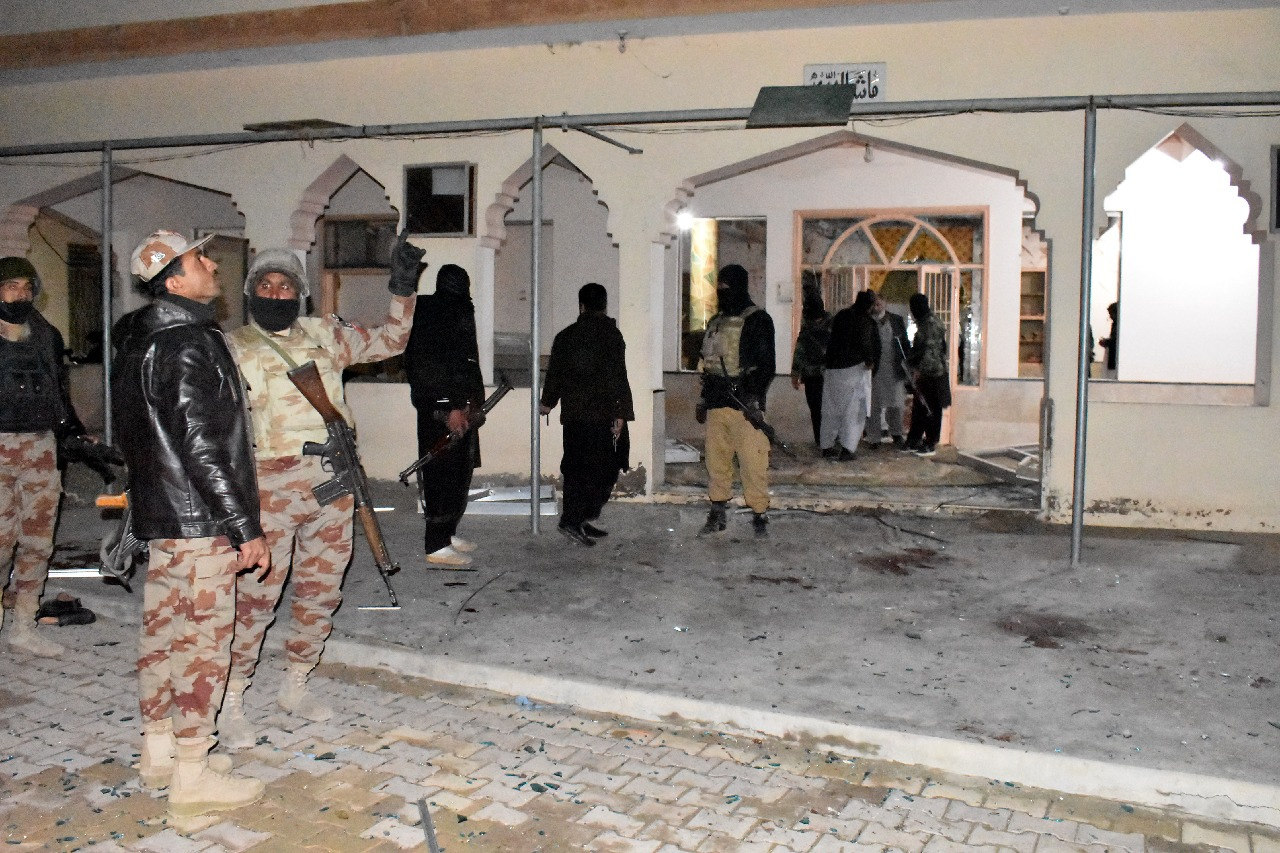
On January 31, the Baloch Liberation Army (BLA) launched what it called ‘Operation Herof 2.0’, carrying out coordinated attacks across 12 districts, including Quetta, Gwadar and Mastung. Official figures stated that 17 police personnel and 31 civilians were killed in the attacks. Pakistani authorities claimed that 145 insurgents were killed in retaliatory operations, a figure disputed by the BLA.
The attacks reportedly included gun assaults, suicide bombings and the temporary takeover of police stations and government facilities. Subsequent intensified security operations have raised concerns among human rights activists about the treatment of local residents.
Balochistan, which accounts for 44 per cent of Pakistan’s land area but only about six per cent of its population, remains the country’s poorest province. According to the report, nearly 70 per cent of residents live in multidimensional poverty, with unemployment estimated at 33 per cent. This is despite the province’s vast natural resources, including the Sui gas fields that supply a significant portion of Pakistan’s natural gas, as well as copper, gold and coal deposits.
The development of the China-Pakistan Economic Corridor (CPEC), particularly projects linked to the Gwadar port, has also triggered concerns among locals. Residents have alleged displacement and economic exclusion, claiming limited participation in employment opportunities and decision-making processes tied to projects in the region.
The report highlighted serious allegations of enforced disappearances and extrajudicial killings. The Baloch Yakjehti Committee (BYC) reported 1,223 cases of enforced disappearances in 2025, while the Human Rights Council of Balochistan documented 1,455 cases, including 1,443 men and 12 women. Of these, 1,052 individuals reportedly remained missing by the end of the year, 317 were released, 83 were allegedly killed in custody and three were shifted to jail.
Additionally, the BYC’s 2025 annual report cited 188 alleged extrajudicial killings, including 75 cases described by activists as part of a “kill and dump” policy. Makran division and Awaran district were identified as among the most affected areas.
Security presence in the province remains extensive, with approximately 736 permanent and 300 temporary checkpoints reportedly operated by Pakistani forces. Critics argue that such militarisation has reinforced perceptions of occupation rather than integration.
The insurgency has also seen the participation of female suicide bombers, a development observers say carries symbolic weight in the traditionally patriarchal society of the region.
According to the report, political analysts believe that a predominantly security-focused approach has failed to resolve what they describe as fundamentally political issues rooted in marginalisation, resource distribution disputes and rights concerns. They argue that sustained dialogue and inclusive governance may be necessary to address the deep-seated crisis in Balochistan.