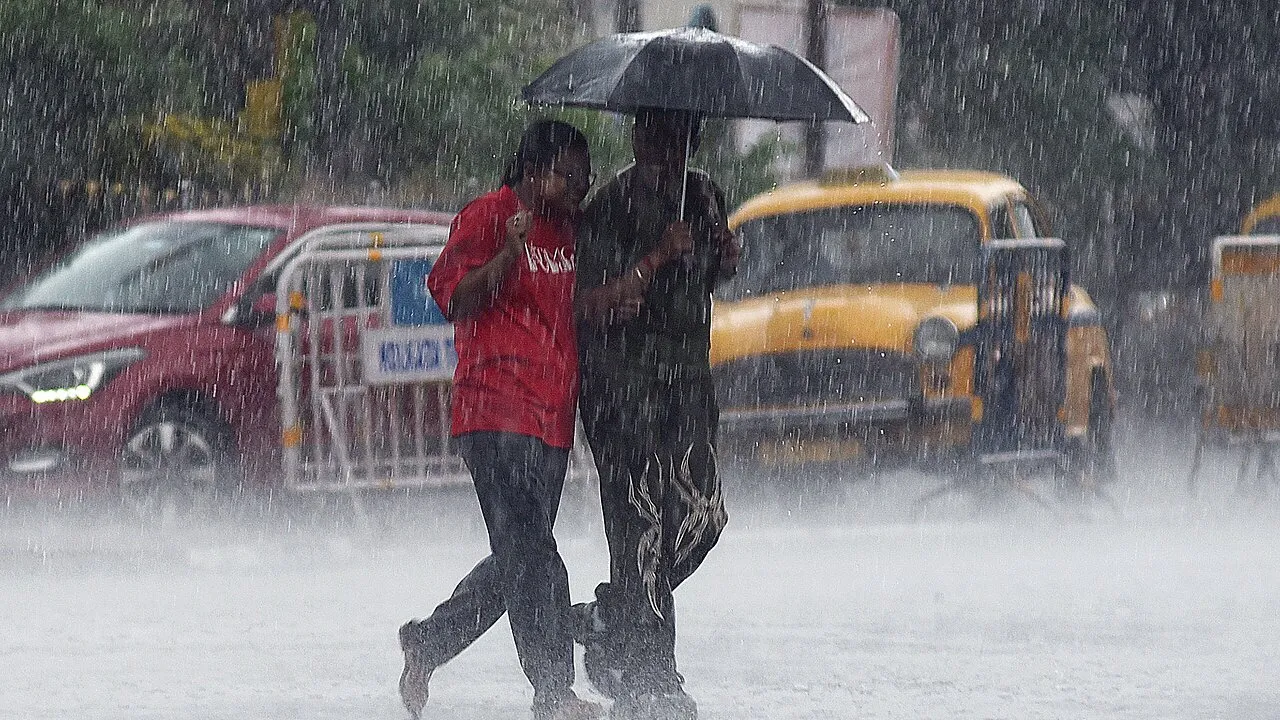
Kolkata, November 11, 2026: Kolkata witnessed a dramatic improvement in air quality on Wednesday as two consecutive days of rainfall helped clear pollution caused by widespread firecracker celebrations during Diwali and Kali Puja. The city’s Air Quality Index (AQI), which had reached severe levels of 400–500 on November 8 and 9, dropped to the satisfactory category at several monitoring stations.
According to data from the Central Pollution Control Board’s (CPCB) National Air Quality Data Management System, recorded at 9 am on Wednesday, Fort William registered an AQI of 75, followed by Rabindra Sarobar at 73 and Jadavpur at 72.
The significant reduction in pollution levels has brought much-needed relief to residents, particularly children, senior citizens and people suffering from respiratory illnesses.
Rainfall Brings Dramatic Improvement in Kolkata’s Air Quality
The improvement comes after Kolkata experienced severe air pollution during the festive celebrations, when extensive bursting of firecrackers pushed the AQI into the hazardous range.
Environmental experts attributed the sharp decline in pollution levels to continuous rainfall, which helped wash away suspended particulate matter and other pollutants from the atmosphere.
Speaking to news agency IANS, prominent environmentalist and green technologist Somendra Mohan Ghosh described the sudden improvement as remarkable.
“What a miracle! Yesterday evening’s and today’s morning rain sharply brought down Kolkata’s AQI to 75, from the 400-500 range recorded on November 8 and 9 during Diwali fireworks celebrations,” Ghosh said.
How Rainfall Reduced Air Pollution
Experts explained that rainfall acts as a natural air purifier by removing harmful particulate matter, including PM2.5 and PM10, from the atmosphere.
These microscopic particles are major contributors to urban air pollution and can pose serious health risks when inhaled.
Rainwater captures airborne particles and carries them to the ground, reducing their concentration in the air. Rainfall can also help remove certain gaseous pollutants, improving visibility and reducing smog.
The improvement has been particularly beneficial for asthma patients and individuals with existing respiratory conditions.
Experts Warn Improvement May Be Temporary
Despite the encouraging decline in pollution levels, environmental experts cautioned that the improvement could be short-lived, particularly with winter approaching.
They urged residents to avoid high-emission firecrackers and adopt environmentally responsible practices during celebrations.
Experts also emphasised the importance of promoting certified green crackers and increasing public awareness about the harmful effects of air pollution.
Winter weather conditions can sometimes trap pollutants closer to the ground, increasing the risk of deteriorating air quality.
Rain and Thunderstorms Forecast Until Thursday
Meanwhile, the Meteorological Department has forecast scattered rainfall accompanied by thunderstorms across Kolkata and several districts of south Bengal until Thursday.
Weather conditions are expected to improve from Friday, with dry weather likely to prevail across West Bengal.
The anticipated change in weather patterns could also signal the gradual arrival of winter in the region.
On Tuesday, Kolkata recorded a maximum temperature of 31 degrees Celsius, approximately 0.5 degrees above normal. The minimum temperature stood at 24 degrees Celsius, three degrees above normal.
Relative humidity levels ranged between 63 and 95 per cent.
Residents Welcome Cleaner Air
The sudden improvement in air quality has provided relief to Kolkata residents following several days of severe pollution.
Clearer skies and reduced smog have offered a welcome change, particularly for vulnerable groups affected by poor air quality.
However, environmentalists stressed that sustained improvements would require stronger pollution-control measures, responsible public behaviour and continued monitoring of air quality.
While rainfall has temporarily improved atmospheric conditions, experts maintain that long-term solutions are essential to prevent recurring pollution episodes during festive seasons and winter months.