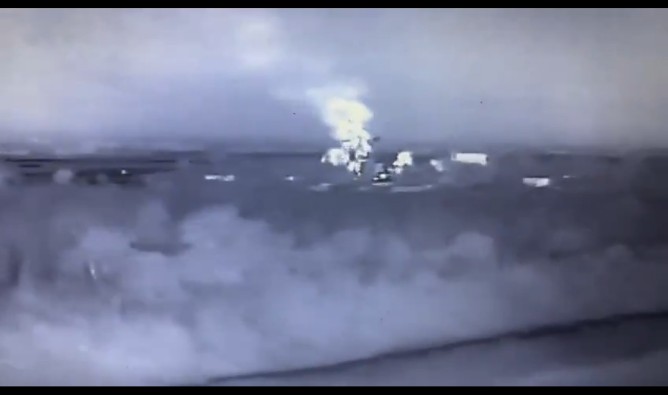

Breaking News: Indian Air Force Allegedly Destroys Four Major Pakistani Air Bases in Precision Strikes
Islamabad/New Delhi, May 10, 2025 – In a dramatic escalation of tensions between India and Pakistan, unconfirmed reports indicate that the Indian Air Force (IAF) has conducted precision missile strikes targeting four key Pakistan Air Force (PAF) bases: Nur Khan Air Base, Murid Air Base, Rafiqui Air Base, and Sargodha Air Base. The strikes, reportedly part of India’s “Operation Sindoor,” are said to have caused significant damage to Pakistan’s military infrastructure, though official confirmation from both sides is still pending. A press conference by the Indian Ministry of Defence is expected later today to provide clarity on these developments.

Details of the Alleged Strikes
According to sources, the targeted air bases are among Pakistan’s most strategically important military installations:
- Nur Khan Air Base (Chaklala, Rawalpindi): Located just 10 km from Islamabad, Nur Khan Air Base, formerly known as Chaklala Air Base, is a critical hub for the PAF. It houses five to six squadrons, including VIP transport aircraft and the No. 10 Multi-Role Tanker Transport Squadron, which operates Il-78 aerial refueling tankers. Its proximity to Pakistan’s military headquarters and the Joint Staff Headquarters makes it a high-value target. Social media posts from Pakistani civilians have shared unverified visuals of fires at the base, suggesting significant damage.
- Murid Air Base (Chakwal, Punjab): Situated in the Chakwal district, Murid Air Base is Pakistan’s primary hub for unmanned aerial vehicle (UAV) operations. It hosts advanced drones such as the Shahpar-1, NESCOM Burraq, and Turkish-made Bayraktar TB2 and Akinci-L, which have been used in surveillance and combat roles. The base’s role in recent drone attacks on Indian territory is believed to have made it a priority target for India’s retaliatory strikes.
- Rafiqui Air Base (Shorkot, Jhang District): Located in Punjab province, Rafiqui Air Base is a major fighter base housing Chinese-made JF-17 Thunder jets, French Mirage 5 fighters, and Alouette III helicopters. Named after Squadron Leader Sarfraz Ahmed Rafiqui, a hero of the 1965 India-Pakistan war, the base supports rapid deployment across borders and is a key asset for Pakistan’s Central Air Command.
- Sargodha Air Base (Sargodha, Punjab): Known as Mushaf Air Base, this is one of Pakistan’s most strategic installations and the headquarters of the PAF’s Central Air Command. It houses the Combat Commanders School and operates advanced aircraftastanza jets like the Dassault Mirage III/5, Chengdu F-7P, and JF-17. Historically, Sargodha was heavily defended during the 1965 war, when the Indian Air Force destroyed 10 Pakistani aircraft there. Its destruction, if confirmed, would represent a significant blow to Pakistan’s air defense capabilities.

Context of the Strikes
The reported strikes come amid heightened tensions following a deadly terror attack on April 22, 2025, in Kashmir’s Pahalgam, which killed 26 tourists, including a Nepali national. India has accused Pakistan of orchestrating the attack, a charge Islamabad denies. In response, India launched Operation Sindoor, targeting nine terrorist hideouts in Pakistan and Pakistan-occupied Kashmir (PoK). Pakistan retaliated with coordinated drone attacks on 26 Indian military and civilian locations, from Leh to Sir Creek, prompting India’s air defense systems to intercept the incursions.
On the night of May 9, Pakistan reportedly fired a long-range missile aimed at a strategic Indian site, which was intercepted by India’s S-400 air defense system in the Western Sector. Hours later, Pakistan launched another wave of drones and loitering munitions, triggering blackouts and air raid sirens across Jammu and Kashmir, Punjab, Haryana, and Gujarat.

Pakistan’s Response
Pakistan’s military spokesperson, Lt Gen Ahmad Sharif Chaudhry, held a press conference at 4 a.m. on May 10, claiming that India fired air-to-surface missiles from its jets targeting Nur Khan, Murid, and Rafiqui air bases. Chaudhry asserted that all PAF assets remained safe and described the strikes as a “sinister act” pushing the region toward war. Pakistan announced the closure of its airspace to civilian flights from 3:15 a.m. to 12:00 p.m. on May 10, citing security concerns. Chaudhry vowed a retaliatory operation named “Bunyan al-Marsous” (Iron Wall), though details remain unclear.
International Reactions
The escalation has drawn global concern. The G7 foreign ministers condemned the Pahalgam attack and urged both nations to exercise maximum restraint and engage in dialogue. U.S. President Donald Trump called the situation “a shame,” noting the long-standing rivalry, while China and the United Nations expressed concern over the risk of a major conflict between the nuclear-armed neighbors.
Discrepancies and Misinformation
Reports on social media and Pakistani media have been rife with conflicting claims. Some pro-Pakistan accounts falsely claimed that Pakistan destroyed Indian brigade headquarters and downed Indian jets, claims debunked by India’s Press Information Bureau (PIB) as misinformation. Similarly, a viral claim of a Pakistani strike on Srinagar airbase was clarified as footage from 2024 sectarian clashes in Pakistan’s Khyber Pakhtunkhwa.
Additionally, there is confusion regarding the targeting of Chaklala and Nur Khan Air Bases, as they refer to the same facility, renamed in 2012 after Air Marshal Nur Khan. Some reports also mention attacks on Sialkot, but these likely refer to a terrorist launchpad in Looni, Sialkot district, destroyed by India’s Border Security Force (BSF) opposite Akhnoor.
What’s Next?
The Indian Army has postponed a scheduled press conference from 5:45 a.m. to 10 a.m. on May 10, where officials are expected to provide a detailed battle assessment and confirm the extent of the strikes. Meanwhile, Pakistan’s Prime Minister Shehbaz Sharif convened a meeting of the National Command Authority, the body overseeing its nuclear arsenal, signaling the gravity of the situation.
As both nations remain on high alert, the international community watches closely, hoping to avert a full-scale conflict. The reported destruction of four major PAF bases, if verified, would mark a significant escalation, potentially reshaping the military balance in the region.
Stay tuned for updates as this story develops.