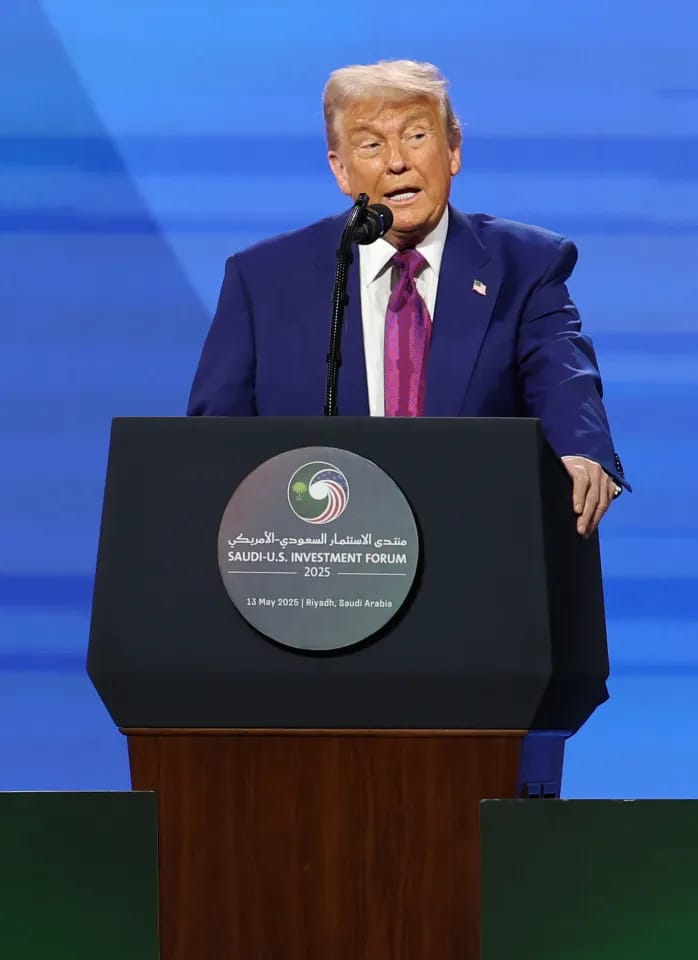

Trump Signs Historic $142 Billion Arms Deal with Saudi Arabia, Bolstering US-Saudi Defense Ties
Riyadh, May 13, 2025: US President Donald Trump and Saudi Crown Prince Mohammed bin Salman have finalized a monumental $142 billion arms deal, described by the White House as the largest defense sales agreement in history. The agreement, signed on Tuesday during Trump’s visit to Riyadh to kick off his Middle East tour, forms part of a broader $600 billion economic and defense cooperation package with Saudi Arabia, aimed at strengthening bilateral ties and enhancing regional security.
The deal includes advanced warfighting equipment and services from over a dozen US defense firms, such as Lockheed Martin, RTX Corp, Boeing, Northrop Grumman, and General Atomics. It encompasses air and missile defense systems, C-130 transport aircraft, radar systems, and a $20 billion package for General Atomics’ MQ-9B SeaGuardian drones, negotiations for which began in 2018. The agreement is expected to support Saudi Arabia’s Vision 2030 initiative to diversify its economy and create thousands of skilled jobs in new sectors.


“This historic deal underscores our commitment to strengthening the US-Saudi defense partnership, equipping Saudi Arabia with state-of-the-art technology to ensure stability in the Gulf region,” the White House stated. The package is seen as a strategic move to counter Iran’s influence in the Middle East, with Trump emphasizing the deal’s role in fostering “peace, partnership, and prosperity.”
The agreement follows the lifting of a US ban on offensive weapons sales to Saudi Arabia in 2024, initially imposed in 2021 due to human rights concerns, including the murder of journalist Jamal Khashoggi and Saudi Arabia’s role in the Yemen conflict. The Biden administration had unsuccessfully pursued a defense pact with Riyadh, which included conditions to limit Chinese investment and arms purchases. However, it remains unclear whether Trump’s deal imposes similar restrictions.
In addition to the arms deal, Saudi Arabia has committed to investing $20 billion in US artificial intelligence infrastructure, signaling a deepening economic partnership. The deal is expected to create significant job opportunities in the US defense sector and reinforce America’s strategic role in the Middle East.


Trump’s visit to Riyadh included a VIP lunch with tech mogul Elon Musk at the Saudi Royal Court and attendance at the Gulf Cooperation Council Summit, where discussions focused on regional diplomacy, including efforts to end the Israel-Hamas conflict and explore a potential nuclear deal with Iran. Trump also expressed optimism about Saudi Arabia joining the Abraham Accords, which he brokered during his first term to normalize ties between Israel and several Arab states.
However, the deal has sparked concerns among some analysts. Critics argue that the massive arms sale could escalate regional tensions, particularly with Iran, and fuel an arms race in the Middle East. “This deal tilts the military balance and could harden Iran’s posture,” one observer noted on social media. Others have called for scrutiny of the agreement, citing Saudi Arabia’s human rights record and the need for congressional oversight, which has historically reviewed major international weapons deals.
The arms package builds on earlier agreements, including a $3.5 billion sale of 1,000 AIM-120C-8 air-to-air missiles approved by the US State Department earlier this month and a $100 million deal for Advanced Precision Kill Weapon Systems in March. Unlike previous proposals, the current deal does not include Lockheed Martin’s F-35 fighter jets, a move likely to address Israel’s concerns about maintaining its qualitative military edge.

The agreement comes amid a broader economic commitment from Saudi Arabia to invest $600 billion in the US over the next four years, a gesture seen as an effort to solidify ties with the Trump administration. During his 2017 visit to Saudi Arabia, Trump signed a $110 billion arms deal, which faced criticism for being speculative, with only $14.5 billion fulfilled by 2018. Experts note that the current deal appears more structured, with firm contracts and immediate deliverables, though it still requires congressional review under US law.
As Trump continues his Middle East tour, the arms deal has been hailed as a diplomatic and economic triumph by supporters, who see it as a testament to his dealmaking prowess. “This is a major power play, reinforcing US leadership and Saudi Arabia’s security,” a social media post remarked. However, the deal’s long-term implications for regional stability and US-Saudi relations remain a subject of intense debate.