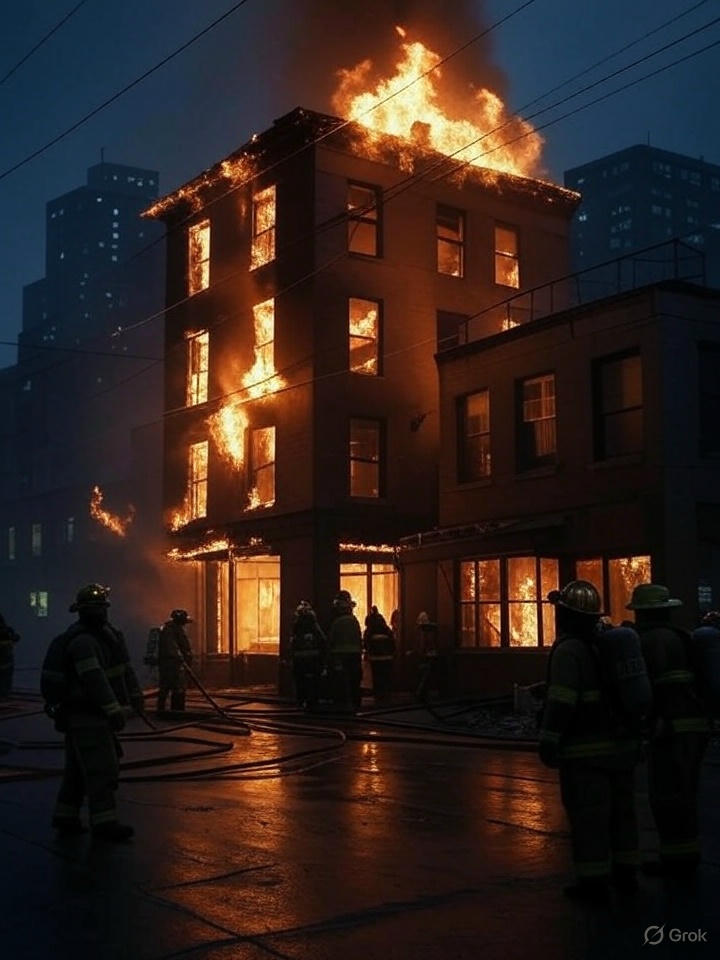


Hyderabad, May 20, 2025: Chief Electrical Inspector Issues Urgent Safety Guidelines to Prevent Fatal Fire Accidents
Following a tragic fire accident at M/s Guljar House, the Office of the Chief Electrical Inspector to the Government of Telangana has issued a public advisory urging strict adherence to electrical safety protocols. The directive, aimed at preventing fatal fire accidents and equipment failures, targets hospitals, multi-storeyed buildings, residential complexes, commercial establishments, cinema halls, hotels, and other public facilities. The Electrical Inspectorate emphasizes compliance with the Electricity Act, 2003, its associated rules, regulations, and additional safety guidelines to ensure the “Safe Use of Electricity.”
The management of these establishments is urged to follow the instructions provided by Electrical Inspectors and Deputy Electrical Inspectors during inspections. Non-compliance will be treated seriously, with legal action under the Electricity Act, 2003, for violations. Below are the key safety guidelines issued in the public interest:

- Qualified Personnel: All electrical work must be performed by licensed electrical contractors, supervised by permit holders and qualified wiremen.
- Circuit Protection: Install 30mA ELCB/RCCB for lighting circuits and 100mA ELCB for power circuits.
- Compliance with Standards: Electrical wiring and installations must adhere to the Central Electricity Authority (Measures Relating to Safety and Electric Supply) Regulations, 2023, National Electrical Code of India 2023 (NEC 2023), National Building Code of India 2016 (NBC 2016), and relevant IS/IEC standards.
- Correct Cable Sizing: Use appropriate cable sizes (e.g., 1.5 sq.mm for lighting, 2.5 sq.mm for power points, 4 sq.mm for AC units) to prevent overheating and ensure fault current and voltage drop management.
- Voltage Stabilizers: Employ stabilizers in areas with voltage fluctuations to prevent insulation damage.
- Cable Derating: Adjust cable ratings based on ambient conditions to avoid exceeding insulation temperature limits.
- Circuit Load Limits: Restrict final sub-circuits to 10 points or 800W, whichever is lower, to prevent overloading.
- Three-Phase Load Balancing: Ensure balanced loads to avoid overheating and neutral current issues.
- Harmonic Filters: Install filters to manage harmonics and maintain a high power factor.
- Switchboard Safety: Avoid connecting multiple phases to a single switchboard to prevent arcs and short circuits.
- Isolation Switches: Install accessible isolation switches for emergency supply disconnection.
- Hospital-Specific Measures: Use IT system earthing, medical isolation transformers, and insulation monitoring systems for critical hospital loads to ensure patient safety.
- Regular Testing: Test RCCBs and MCBs regularly for functionality.
- Surge Protection: Install surge protection devices (SPDs) to safeguard against voltage spikes.
- Earth Fault Management: Maintain low earth fault loop impedance for rapid circuit breaker response.
- Fire Prevention: Avoid placing switchboards and sockets near flammable materials and investigate faults before resetting breakers or replacing fuses.
- Battery Storage: Store batteries in well-ventilated areas to prevent hydrogen gas buildup.
- Equipment Access: Ensure adequate clearance around electrical equipment for safe operation.
- Wardrobe Lighting Risks: Avoid fire hazards from wardrobe lighting installed by interior designers.
- Conduit Space Factor: Account for space in conduits to prevent overheating.
- Fire-Rated Sealants: Use fire-rated sealants in shafts and cable/conduit entry points to prevent fire and smoke spread in high-rise buildings.
- Lightning Protection: Implement systems with air terminals, down conductors, and proper grounding.
- Cable Lugs: Use correctly sized lugs for secure electrical connections.
- IP-Rated Enclosures: Protect equipment with IP-rated enclosures against dust and moisture.
- ISI-Marked Components: Use certified electrical components meeting Indian safety standards.
- Flexible Design: Plan electrical systems to accommodate future load increases.
- Fire Extinguishers: Provide CO2 or dry powder extinguishers for electrical fires.
- Bathroom Safety: Never install switchboards in bathrooms to reduce electrocution risks.
- Safe Operation: Avoid contact with live equipment and use rubber gloves or footwear when operating devices.
- AI-Based Systems: Employ AI for remote operation to minimize human exposure.
- Emergency Response: Use non-conductive tools (e.g., wooden sticks) to isolate shock victims and administer CPR if needed.
- Evacuation Access: Keep balconies open for emergency evacuations.
- Isolation Switches for Godowns: Install accessible switches outside storage areas.
- Dry-Type Transformers: Use only dry-type transformers in residential and commercial buildings.
- Protection Device Ratings: Ensure fuses, MCBs, and MCCBs match load capacity.
- Wire Sizing: Use identical sizes for phase, neutral, and earth wires in lighting and power circuits.
- Earthing Maintenance: Monitor earthing systems regularly.
- Periodic Inspections: Inspect LV installations every 5 years, MV every 3 years, and HV annually.
- Wire Replacement: Test and replace electrical wires older than 15 years.
- Avoid Overloading Sockets: Do not use multi-plug adapters to overload 3-pin sockets.
- Check Connections: Replace damaged cables and address loose connections.
- Equipment Monitoring: Stop and repair equipment showing abnormal sounds or temperature rises.
- Panel Security: Keep electrical panel doors and covers closed.
- Ventilation: Ensure proper ventilation for transformers, generators, and switchgear.
- Qualified Maintenance: Conduct maintenance through licensed electrical contractors or engineers.
- Work Reports: Obtain Work Commencement (WR-I) and Work Completion (WR-II) reports from contractors before supply release.
- Automatic Fire Suppression: Equip panel distribution boards with CO2 or nitric casting systems for fire emergencies.
- Fire-Retardant Cables: Use low-smoke, low-halogen cables in buildings over 15 meters, per standards.
- Bus Bar Systems: Distribute electricity in high-rise buildings using bus bar trunking systems.
- Meter Placement: Avoid installing electricity meters in staircases.
- Specialized Cables: Use halogen-free, flame-retardant cables in airports, hospitals, and hotels, regardless of height.

The Chief Electrical Inspector urges all stakeholders to cooperate and strictly adhere to these guidelines to prevent fire accidents and ensure electrical safety. For further details, contact the Office of the Chief Electrical Inspector, Hyderabad.