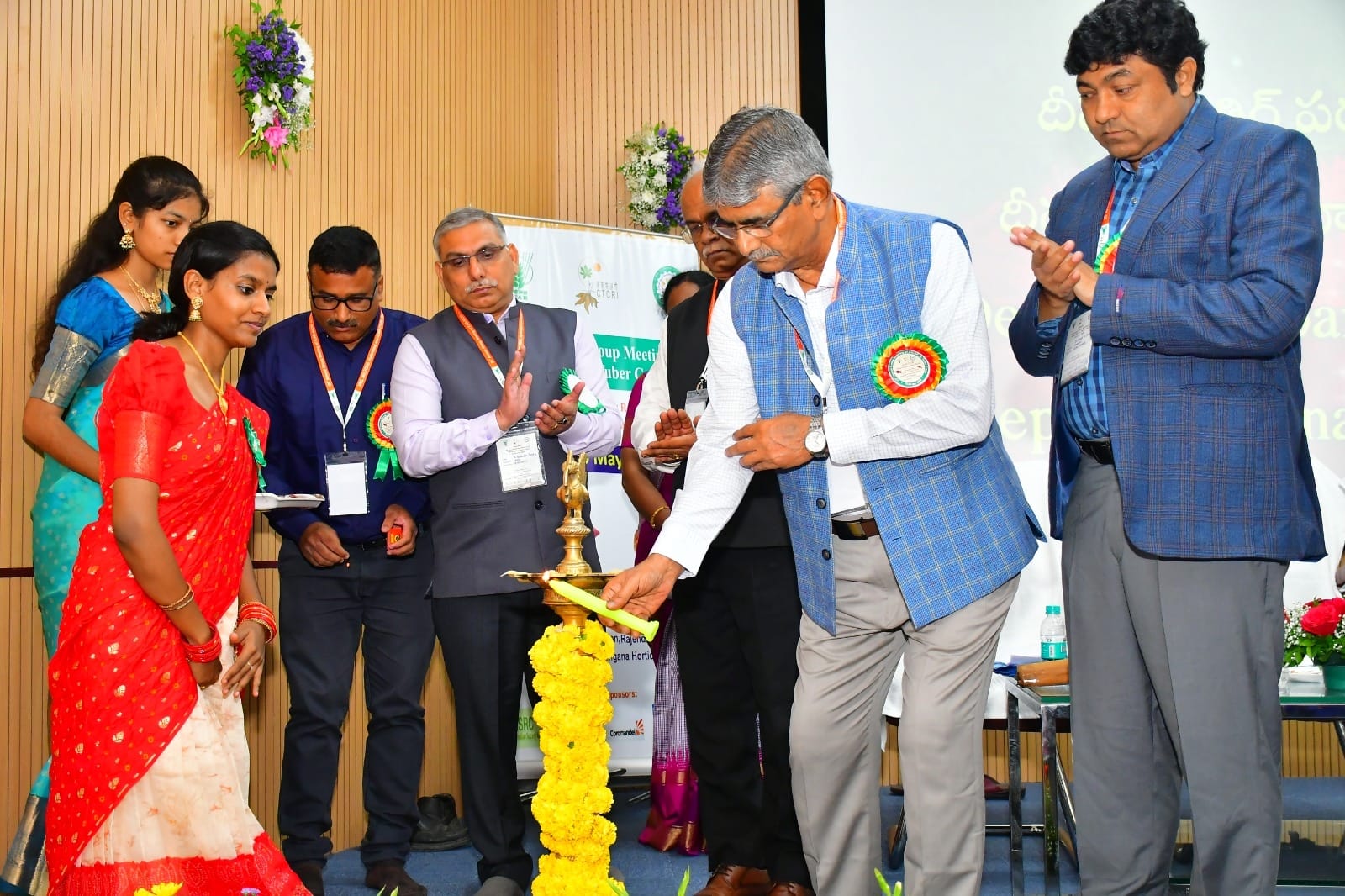

Tuber Crops Touted as Key to India’s Nutritional Security at National Conference
Hyderabad, May 19, 2025: Tuber crops could be a game-changer for India’s nutritional security, rural livelihoods, and export potential, experts declared at the 25th Annual Group Meeting of the All India Coordinated Research Project (AICRP) on Tuber Crops, held in Hyderabad on Monday. The two-day conference, hosted at the College of Horticulture, Rajendranagar, on May 19-20, was organized by the Central Tuber Crops Research Institute (CTCRI), Kerala, and the Vegetable Research Station, Telangana.


Dr. Danda Raji Reddy, Vice Chancellor of Sri Konda Laxman Telangana Horticultural University, highlighted tuber crops as climate-resilient, nutrient-rich solutions for sustainable agriculture. “These crops can be grown in diverse systems, including backyard spaces, and short-duration varieties, coupled with Farmer Producer Organizations (FPOs) and urban proximity cultivation, can enhance accessibility,” he said. Dr. Reddy also stressed the potential for a “tuber revolution” through value-added processing, technology-driven productivity, and export promotion, noting that horticulture families earn Rs. 13,000–14,000 monthly, far surpassing the Rs. 3,000–4,000 from other crops.

In his keynote address, Dr. Sanjay Kumar Singh, Deputy Director General of the Indian Council of Agricultural Research (ICAR), called for intensified research into biofortified, nutrient-rich tuber varieties and sustainable farming practices using organic fertilizers and botanicals. Dr. Sudhakar Pandey, ICAR Assistant Director General, underscored the global significance of tuber crops, which account for 4.6–5% of vegetable production and 6% of global food output. He highlighted ongoing advancements in high-density cultivation, virus-resistant strains, and genomics, emphasizing their role in tackling India’s hidden hunger.

Dr. G. Baiju, Director of CTCRI, Kerala, advocated for short-duration, water-efficient varieties tailored to local climates, noting their superior nutritional profile compared to cereals and millets. Dr. Sheikh N. Meera, Director of ICAR-ATARI Zone 10, urged a shift from rice-centric agriculture, calling for smart clusters, better storage, branding, and self-help group involvement to strengthen the tuber value chain.
The conference also celebrated excellence, with BSKKV, Dapoli, Maharashtra, named the Best AICRP Tuber Crop Centre for 2024–25. The University of Agricultural Sciences, Dharwad, topped revenue generation, followed by Dapoli and Navsari Agricultural University, Gujarat.

Over 50 scientists and experts from 21 research centers across 20+ states attended, including Dr. Lakshminarayana, Dr. Bhagwan, Dr. D. Anita Kumari, Dr. J. Cheena, Dr. Suresh Reddy, Dr. K. Veeranjaneyulu, and Dr. P. Prasanth.
The event underscored the untapped potential of tuber crops to transform India’s agricultural landscape, paving the way for enhanced food security and economic growth.