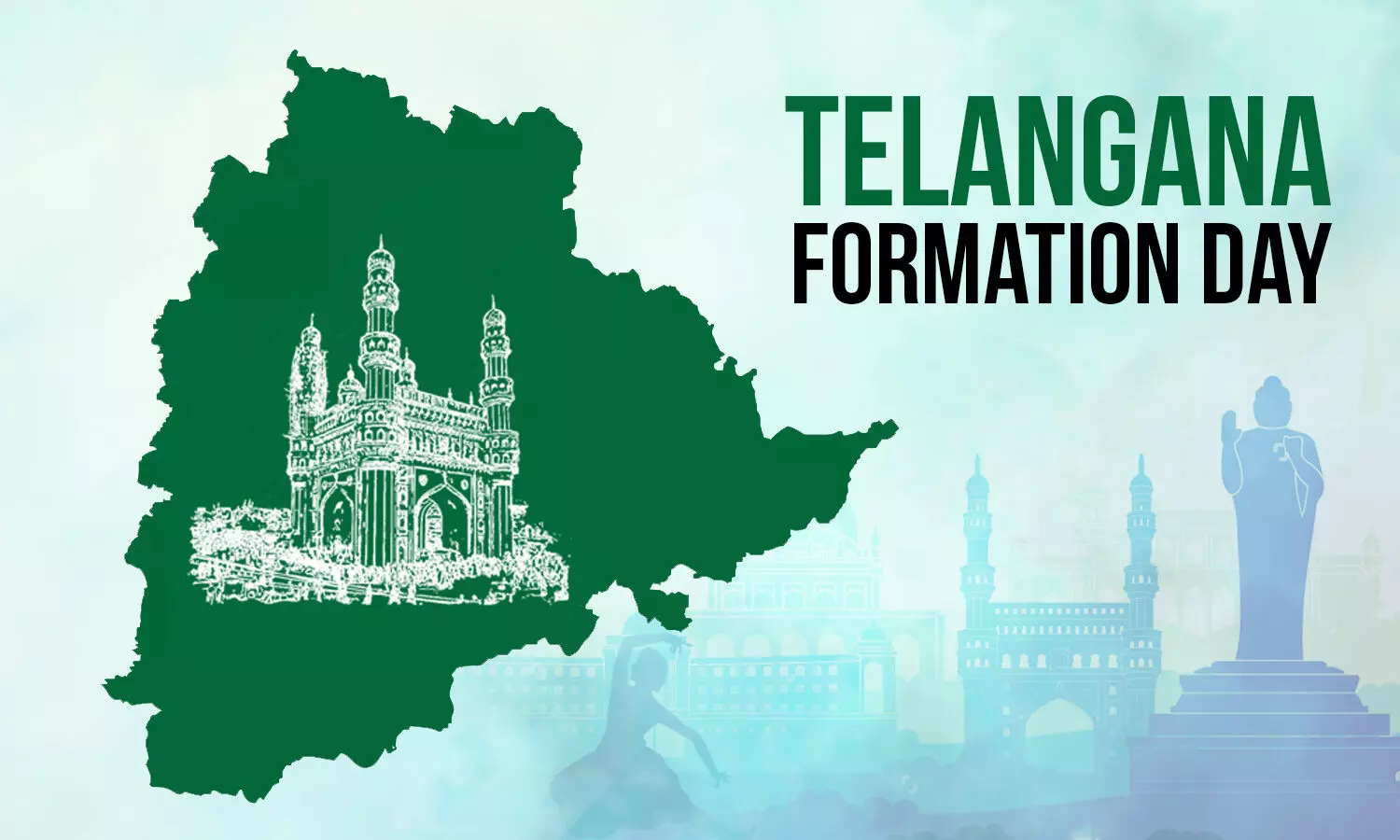

Telangana Formation Day 2025: Celebrating the 11th Anniversary of a Historic Triumph
On June 2, 2025, Telangana will celebrate its 11th Formation Day, marking the creation of India’s 29th state on June 2, 2014. This day, known as Telangana Statehood Day, is a vibrant tribute to the state’s rich cultural heritage, resilient spirit, and the culmination of a decades-long struggle for regional identity and self-governance. Across its 33 districts, the people of Telangana will honor the sacrifices of martyrs, celebrate achievements, and reaffirm their commitment to progress. This article provides a detailed account of the state’s formation, highlighting key figures, movements, and political milestones that shaped this historic journey.
Historical Background: The Roots of the Telangana Movement
The struggle for Telangana’s statehood began in the 1950s, rooted in the region’s distinct historical, cultural, and economic identity. Telangana, part of the princely state of Hyderabad under Nizam rule, was merged with Andhra Pradesh on November 1, 1956, under the States Reorganisation Act to form a unified Telugu-speaking state. However, this merger led to grievances over economic disparities, cultural marginalization, and unequal resource allocation, fueling demands for a separate state.

The Telangana Farmers’ Armed Struggle (1946–1951) laid an early foundation for resistance. Led by communist groups, this peasant uprising against feudal landlords and the Nizam’s oppressive rule in rural Telangana highlighted issues of land rights and exploitation. Though not explicitly a statehood movement, it sowed seeds of dissent against systemic inequalities, influencing later agitations.
In the 1960s, Professor M. Jayashankar, an academic and ideologue from Kakatiya University, emerged as a pivotal figure. Often called the “Father of the Telangana Movement,” Jayashankar articulated the region’s grievances through his writings and speeches, emphasizing economic neglect and cultural suppression. His intellectual leadership inspired generations, providing a robust ideological framework for the movement. Similarly, Konda Laxman Bapuji, a Gandhian and freedom fighter, played a crucial role as a grassroots leader, mobilizing support and advocating for Telangana’s unique identity from the 1950s onward.

The 1969 Movement and the Rise of Telangana Praja Samithi
The first major agitation for statehood erupted in 1969, known as the 1969 Telangana Movement. Sparked by discontent over unfulfilled promises of equitable development, it was led by students, government employees, and intellectuals. The Telangana Praja Samithi (TPS), formed under the leadership of Marri Chenna Reddy, became the movement’s political voice. TPS organized widespread protests, demanding a separate Telangana. The agitation saw significant participation from Osmania University students, whose campus became a hub of activism. Tragically, the movement was suppressed with police action, resulting in the loss of 369 lives. Despite its suppression, the 1969 movement galvanized public sentiment and kept the demand for statehood alive.
The People’s War Group and Continued Agitations
In the 1980s and 1990s, the People’s War Group (PWG), a Maoist organization, gained traction in Telangana’s rural areas, particularly in districts like Warangal and Nalgonda. While primarily a class-based movement, the PWG incorporated Telangana’s regional grievances, highlighting rural neglect and economic disparities. Though controversial, it amplified the statehood narrative in marginalized areas. Simultaneously, organizations like the Telangana Janasabha, a socio-political platform, worked to sustain the movement through grassroots campaigns, uniting intellectuals, farmers, and youth.

Resurgence in the 2000s: TRS and Mass Mobilization
The movement gained renewed momentum with the formation of the Telangana Rashtra Samithi (TRS), now Bharat Rashtra Samithi (BRS), by K. Chandrashekar Rao (KCR) in 2001. KCR’s leadership reinvigorated the cause, with TRS becoming the political spearhead of the statehood demand. His indefinite hunger strike in November 2009 was a turning point, galvanizing mass support and pressuring the central government. The Telangana Political Joint Action Committee (TJAC), led by figures like M. Kodandaram, played a critical role in uniting political parties, student groups, and civil society. TJAC’s initiatives, such as the Million March in Hyderabad on March 10, 2011, showcased the movement’s widespread support.
Osmania University students were once again at the forefront, organizing rallies, hunger strikes, and protests. The campus became a symbol of resistance, with students facing police repression but remaining steadfast. Their slogan, “Jai Telangana,” echoed across the state, inspiring millions.

Political Milestones and Key Figures at the National Level
The movement’s success owed much to political developments at the national level. In December 2009, the Union Government, under Prime Minister Manmohan Singh, announced its intent to initiate the process for Telangana’s formation, following KCR’s hunger strike. Sonia Gandhi, as Congress President, played a decisive role in pushing the statehood agenda. Her leadership in the Congress Working Committee’s resolution on July 30, 2013, recommending Telangana’s creation, was pivotal. Pranab Mukherjee, then a senior Congress leader and later President of India, facilitated negotiations and ensured the process moved forward.
The Bharatiya Janata Party (BJP) also played a crucial role, with Sushma Swaraj, as Leader of the Opposition, strongly supporting the Telangana Bill in Parliament. Her advocacy, alongside bipartisan efforts, ensured the passage of the Andhra Pradesh Reorganisation Act, 2014, in February 2014. Telangana MPs, including KCR and others from TRS, staged agitations in Parliament, disrupting sessions to demand swift action on the bill. Their protests, including dramatic displays like holding placards and chanting slogans, kept the issue in the national spotlight.
The Final Push and Statehood
The Andhra Pradesh Reorganisation Act, passed on February 20, 2014, and receiving presidential assent on March 1, 2014, marked the culmination of decades of struggle. On June 2, 2014, Telangana was officially formed, with Hyderabad as its capital and KCR as its first Chief Minister. The state’s creation was a testament to the collective efforts of activists, students, political leaders, and ordinary citizens.

Significance of Telangana Formation Day
Telangana Formation Day is a celebration of a democratic triumph that addressed economic, cultural, and political grievances. It honors:
- Sacrifices of Martyrs: The day pays tribute to those who lost their lives, particularly during the 1969 movement and later agitations.
- Cultural Identity: Telangana’s heritage, shaped by the Satavahanas, Kakatiyas, Qutb Shahis, and Nizams, is showcased through festivals like Bathukamma and Bonalu, and art forms like Perini Sivatandavam.
- Progress and Development: Telangana’s economic growth, with IT exports rising from ₹57,258 crore in 2014 to ₹1,83,569 crore, and schemes like Rythu Bandhu, reflects its focus on inclusive development.
- Unity and Pride: The day unites communities through cultural and community events, fostering a shared sense of identity.

Telangana Formation Day 2025: Celebrations
The 11th Formation Day in 2025 will be marked with grandeur across Telangana’s 33 districts. Key highlights include:
- Official Ceremonies: Chief Minister A. Revanth Reddy will hoist the national flag at Parade Grounds, Secunderabad, followed by a parade. Tributes will be paid at Gun Park to honor martyrs like those from the 1969 movement and Osmania University protests.
- Cultural Programs: A four-day festival will feature folk arts like Oggu Kathalu and Chindu Bhagavatham, alongside Bathukamma celebrations. Food festivals will highlight Telangana’s cuisine, such as Hyderabadi biryani and sakinalu.
- Educational Events: Schools and colleges, particularly Osmania University, will host seminars, debates, and exhibitions on the contributions of figures like Jayashankar, Bapuji, and TPS.
- Economic Reflections: The government will highlight achievements in IT, agriculture, and schemes like Indiramma Illu, building on the legacy of post-2014 development.
Key Contributions Revisited
- Professor M. Jayashankar: Provided intellectual leadership, shaping the movement’s ideology.
- Konda Laxman Bapuji: Mobilized grassroots support, emphasizing cultural identity.
- Telangana Farmers’ Armed Struggle: Highlighted rural grievances, laying early groundwork.
- 1969 Movement and TPS: Marked the first major statehood agitation, with TPS as its political voice.
- People’s War Group and Telangana Janasabha: Amplified rural and intellectual support.
- TRS and KCR: Spearheaded the modern movement, with KCR’s hunger strike as a catalyst.
- Osmania University Students: Drove protests, making the campus a symbol of resistance.
- TJAC: Unified diverse groups, organizing key protests like the Million March.
- Sonia Gandhi, Manmohan Singh, Pranab Mukherjee, Sushma Swaraj: Facilitated the legislative process, with Telangana MPs ensuring parliamentary focus.
Challenges and Future Aspirations
Post-2014, Telangana faced challenges like water-sharing disputes and Hyderabad’s shared capital status, resolved by 2024. The state continues to prioritize sustainable development, with investments in IT, education, and cultural preservation. Formation Day 2025 will reflect on these achievements while setting goals for inclusive growth.
Conclusion
Telangana Formation Day 2025 celebrates the 11th anniversary of a state born from a relentless struggle for identity and justice. From the Farmers’ Armed Struggle to the 1969 movement, from the leadership of Jayashankar and Bapuji to the political resolve of KCR, TPS, TRS, and TJAC, and the pivotal roles of Sonia Gandhi, Manmohan Singh, Pranab Mukherjee, Sushma Swaraj, and Telangana MPs, the journey to statehood was a collective triumph. On June 2, 2025, as Telangana celebrates with parades, cultural events, and tributes, it will honor its past and embrace a future of prosperity and unity.
Happy Telangana Formation Day!