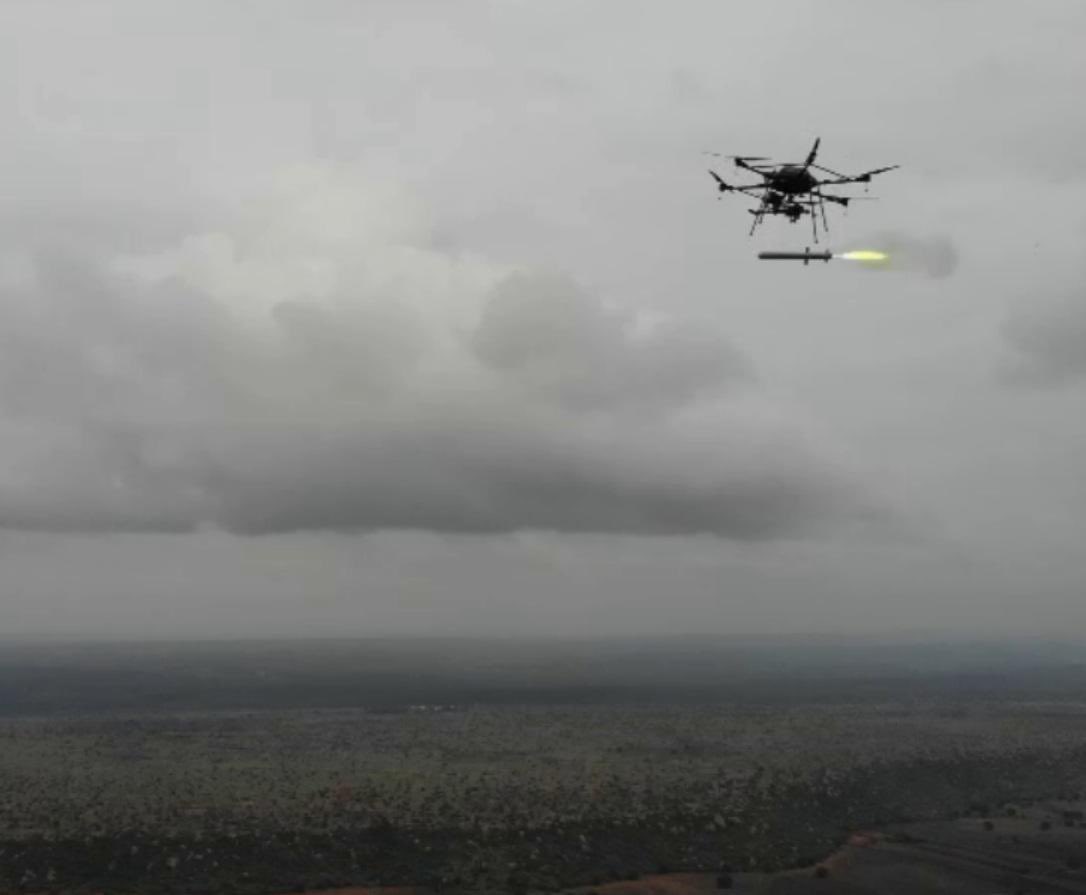

DRDO Successfully Conducts Flight Trials of UAV-Launched Precision Guided Missile ULPGM-V3 in Andhra Pradesh
Kurnool, Andhra Pradesh, July 25, 2025 – In a significant stride toward bolstering India’s defense capabilities, the Defence Research and Development Organisation (DRDO) has successfully conducted flight trials of the UAV-Launched Precision Guided Missile (ULPGM)-V3 at the National Open Area Range (NOAR) in Kurnool, Andhra Pradesh. This achievement marks a pivotal moment in India’s pursuit of self-reliance in advanced defense technologies, aligning with the government’s Aatmanirbhar Bharat initiative.
The ULPGM-V3, an indigenously developed missile system, is designed to be launched from unmanned aerial vehicles (UAVs), offering enhanced precision and flexibility in targeting. The missile is equipped with cutting-edge guidance systems, enabling it to strike targets with pinpoint accuracy, making it a critical asset for modern warfare scenarios. The trials demonstrated the missile’s ability to integrate seamlessly with UAV platforms, showcasing its operational reliability and effectiveness in real-world conditions.

Defence Minister Rajnath Singh announced the success of the trials on the social media platform X, stating, “In a major boost to India’s defence capabilities, DRDO has successfully carried out flight trials of UAV-Launched Precision Guided Missile (ULPGM)-V3 at the National Open Area Range (NOAR), Kurnool, Andhra Pradesh.” He extended his congratulations to DRDO and its industry partners, including Defence Capital Procurement Partners (DcPPs), Micro, Small, and Medium Enterprises (MSMEs), and innovative start-ups, for their collaborative efforts in developing this advanced missile system.
“This success underscores the Indian defense industry’s growing capability to absorb, innovate, and produce critical technologies indigenously,” the Defence Minister added, emphasizing the nation’s progress in reducing reliance on foreign defense imports. The ULPGM-V3 is a testament to India’s advancements in developing sophisticated weaponry that meets global standards.
The trials, conducted under controlled conditions at NOAR, involved rigorous testing of the missile’s flight performance, guidance systems, and payload delivery. According to DRDO officials, the ULPGM-V3 demonstrated exceptional accuracy and stability during the tests, successfully engaging designated targets. The missile’s modular design allows for adaptability across various UAV platforms, enhancing its versatility for use in diverse operational scenarios, including counter-insurgency operations and precision strikes.
The development of the ULPGM-V3 is a collaborative effort involving multiple stakeholders in India’s defense ecosystem. DRDO’s partnership with MSMEs and start-ups highlights the growing role of smaller enterprises in contributing to high-tech defense projects. This synergy has not only accelerated the development process but also fostered innovation and self-sufficiency in India’s defense sector.
The successful trials come at a time when India is intensifying efforts to modernize its armed forces and enhance its indigenous defense manufacturing capabilities. The ULPGM-V3 is expected to strengthen the Indian Air Force and Army’s operational capabilities, providing them with a strategic edge in aerial warfare. The system’s ability to be deployed from UAVs reduces risks to human pilots while enabling rapid response to dynamic battlefield conditions.
Industry experts have hailed the ULPGM-V3 as a game-changer, noting its potential to enhance India’s deterrence capabilities. The missile’s development aligns with DRDO’s broader vision of creating a robust ecosystem for advanced defense technologies, including next-generation drones, missiles, and electronic warfare systems.
As India continues to prioritize self-reliance in defense production, the successful trial of the ULPGM-V3 is a milestone that reinforces the country’s commitment to innovation and technological sovereignty. The DRDO is expected to conduct further trials to refine the system, with plans to integrate it into the armed forces’ operational framework in the near future.
This achievement not only strengthens India’s defense arsenal but also positions the country as a formidable player in the global defense technology landscape, showcasing its ability to deliver cutting-edge solutions for modern warfare.