
Surat Textile Units Working Overtime to Meet Unprecedented Tricolor Flag Demand Ahead of Independence Day
Surat, Gujarat | August 4, 2025:
With India gearing up to celebrate its 78th Independence Day on August 15, the textile city of Surat has turned into a national production powerhouse, manufacturing lakhs of tricolor flags to meet skyrocketing demand. The surge is primarily driven by the Centre’s continued emphasis on the ‘Har Ghar Tiranga’ campaign, which encourages citizens to hoist the national flag with pride at their homes and workplaces.
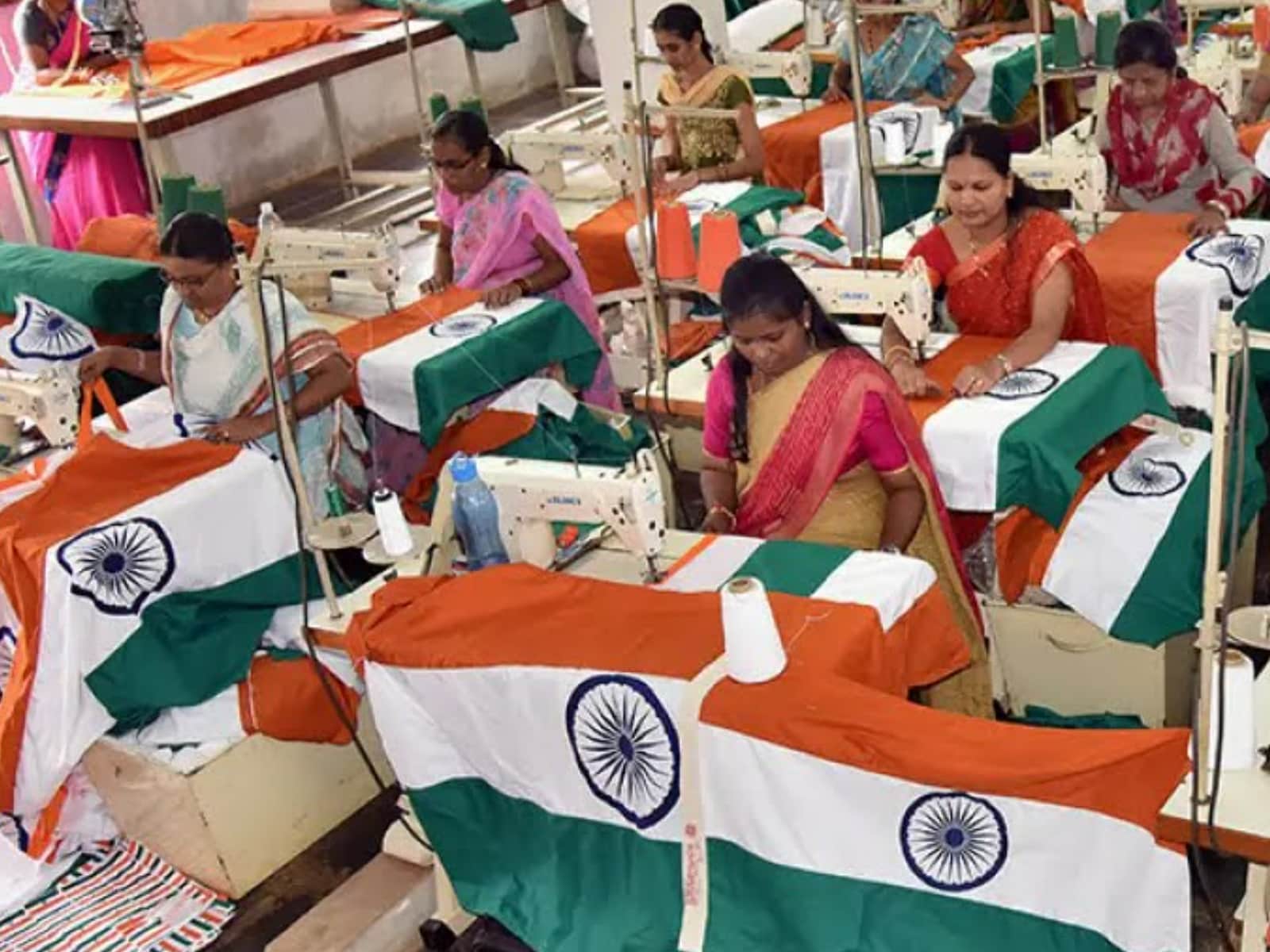
In response, textile production units in Surat — known globally for their synthetic fabric exports — have shifted significant portions of their operations to focus solely on the production of the Indian National Flag. From powerlooms to stitching units, thousands of workers, many of them women, are working in double and triple shifts to meet tight deadlines and ensure timely dispatch of flags across India.


Massive Demand Nationwide
This year’s demand for flags has exceeded all previous records, say industry insiders. Flag orders have poured in from almost every state and union territory, with the highest demand seen from Uttar Pradesh, Maharashtra, Rajasthan, Delhi, and Karnataka.
“Compared to last year, our production has nearly doubled,” said Mehul Desai, owner of a mid-sized textile unit in Surat. “We’ve received large orders not just from government departments, but also from private schools, NGOs, resident welfare associations, and even retail chains. The emotion around the tricolor is very strong this year.”
According to the Surat Textile Manufacturers Association (STMA), over 80 lakh flags are being manufactured in the city this season alone. Of these, nearly 20% are Khadi and eco-friendly flags, reflecting the growing awareness about sustainable alternatives.


Empowering Women in the Workforce
One of the most heartening aspects of the flag production drive has been the significant role of women in the process. From handling delicate stitching of the three colored bands, to attaching the Ashoka Chakra, to final packing and inspection — women have been at the forefront.
“I feel proud that my work contributes to the national celebration,” said Lataben, a tailor working in a flag unit in the Udhna area of Surat. “It’s not just stitching — it’s serving the country.”
Women constitute nearly 65% of the workforce involved in the flag manufacturing process this year, according to local industry estimates.

Rise in Khadi and Eco-Friendly Flags
In line with the Prime Minister’s call for promoting Khadi and sustainable products, demand for Khadi flags and biodegradable material flags has witnessed a sharp rise. Many orders come with specifications for natural dyes, handspun cotton, and traditional stitching methods, offering a major boost to artisans and weavers from Gujarat and neighboring Rajasthan.
“Khadi is not just a fabric; it’s a symbol of our freedom struggle,” said an official from the Khadi and Village Industries Commission (KVIC). “This demand is reviving interest in traditional weaving and providing employment in rural areas too.”
Economic Boost for the Textile Sector

The flag production boom has brought a much-needed economic stimulus to Surat’s textile industry, which was hit by recent fluctuations in global demand and rising raw material prices. With orders pouring in and payment cycles moving quickly due to the short turnaround time before Independence Day, many factories have hired temporary workers, boosting local employment.
Transport and logistics agencies are also part of this logistical mission, ensuring flag consignments reach remote corners of the country in time. Railways and courier services are reportedly prioritizing national flag consignments in the run-up to August 15.
Strict Compliance with Flag Code
Manufacturers are also ensuring strict adherence to the Flag Code of India, 2002, and the recent amendments that permit machine-made polyester flags along with traditional handwoven Khadi ones. Units are closely following Bureau of Indian Standards (BIS) guidelines for color accuracy, dimensions, and the exact rendering of the Ashoka Chakra.
“Authorities have been conducting random inspections to ensure no substandard or disrespectful use of the flag occurs,” said Raju Solanki, a compliance officer overseeing one of the production hubs.

Conclusion: Patriotism in Every Stitch
As the nation prepares to mark 78 years of freedom, Surat’s textile industry has emerged not just as a commercial contributor, but as a symbol of collective national effort. Each flag stitched in the city carries more than just thread and color — it carries the spirit of unity, the pride of independence, and the hard work of thousands who labor quietly to make India’s tricolor wave proudly across its skies.