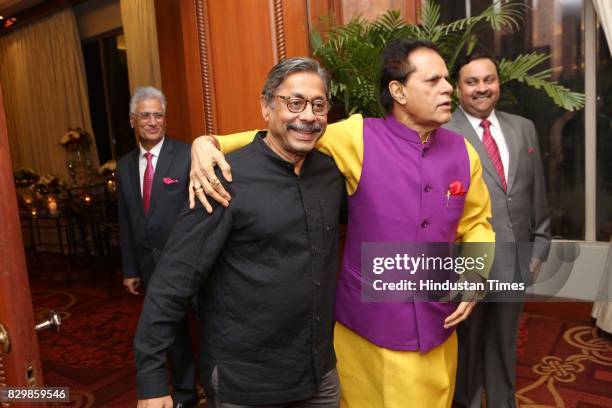

Banks Forgive Political Leader’s Debt, Citizens Question Double Standards
Hyderabad, VGlobe News:
A massive controversy has erupted after banks agreed to write off loans worth nearly ₹5,700 crore taken by film producer and senior Congress leader T. Subbirami Reddy’s family-owned company, Gayatri Projects Ltd. The waiver—granted under the cover of insolvency proceedings—has triggered public anger, with critics calling it “legalized looting” of taxpayers’ money.
Gayatri Projects, once a prominent infrastructure company, had borrowed more than ₹8,100 crore from a consortium of banks. After defaulting on repayments, the company entered the insolvency process before the National Company Law Tribunal (NCLT). Instead of aggressively pursuing recovery or tracing how the borrowed funds were spent, the banks struck a One-Time Settlement (OTS) deal that stunned observers. Under this arrangement, the company would pay only about ₹2,400 crore, while the balance—over ₹5,700 crore—would be quietly written off.

Banks’ Controversial Role in the Waiver
The lion’s share of these loans came from Canara Bank, which alone sanctioned ₹1,911 crore to Subbarami Reddy’s company. Bank of Baroda extended ₹1,382 crore, while State Bank of India (SBI), Bank of Maharashtra, and several other public sector lenders together accounted for the remaining debt.
According to official claims filed during the insolvency process, lenders’ exposure stood at ₹7,947 crore, including more than ₹3,000 crore in bank guarantees. Despite this staggering figure, banks agreed to absorb the bulk of the loss, citing “cost escalations in infrastructure projects” as the reason for default.
Banking experts and critics, however, argue that the waiver reflects not helplessness but a calculated compromise influenced by political pressure.

Political Privilege or Business Failure?
Analysts highlight that Subbarami Reddy’s family continues to retain control of Gayatri Projects despite the loan write-off. “This is not an ordinary business failure—it is a case where a politically powerful family walks away from responsibility while citizens bear the burden,” said one economist.
For many, the outrage lies in the double standard: farmers and small traders face harassment, asset seizures, and jail for failing to repay even small loans, while powerful corporates and political leaders manage to wipe out debts worth thousands of crores with the stroke of a pen.
A Pattern of Corporate Loan Waivers
This is not an isolated case. Across India, politically connected business houses have repeatedly benefited from similar waivers.
- In Rajasthan, companies linked to former Chief Minister Ashok Gehlot’s family reportedly secured relief.
- In Maharashtra, sugar mills tied to NCP leader Sharad Pawar’s family saw debt restructuring.
- In Gujarat, several infrastructure firms with ties to ruling party leaders enjoyed favorable settlements.
At the national level, economists estimate that corporate loan waivers have crossed ₹10 lakh crore in the past decade. Public sector banks, under pressure, have written off these bad loans, weakening their balance sheets and indirectly eroding public savings.
Citizens React: “Why Only for the Rich?”
The news has sparked a wave of anger among citizens. Farmers’ unions, trade bodies, and social activists are questioning why banks show leniency toward the wealthy while relentlessly pursuing ordinary borrowers. “A farmer unable to repay ₹1 lakh loses his land. But a politician-businessman defaulting on ₹5,000 crore gets a waiver. Is this justice?” asked an activist in Hyderabad.
Economists Warn of Long-Term Damage
Economists caution that the repeated cycle of political-corporate loan waivers undermines India’s banking sector and fiscal stability. “Each rupee written off is taxpayers’ money. The system is rewarding default instead of penalizing it,” said a financial analyst.
If unchecked, experts warn, such practices could lead to further erosion of public trust in banks and weaken the very foundation of India’s economy.
👉 The Subbirami Reddy loan waiver case is now being seen as a test case for accountability in India’s financial system. Will regulators and policymakers step in—or will political privilege once again prevail over public interest?