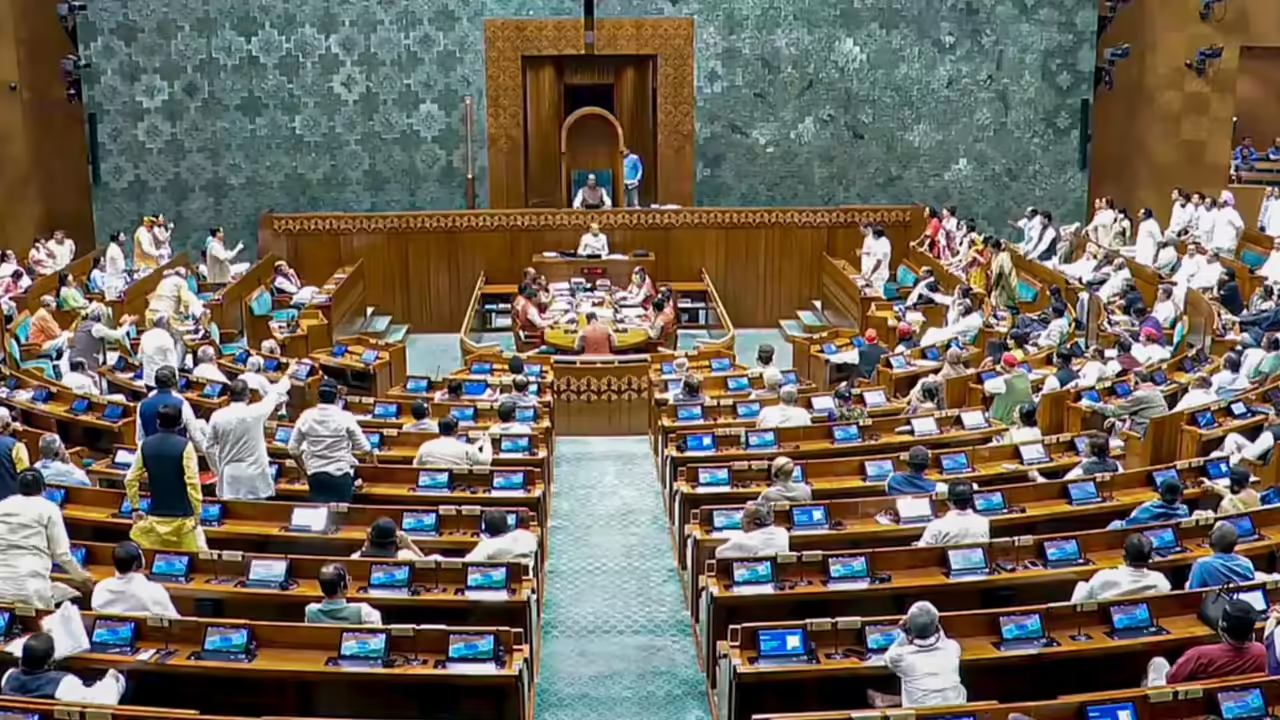
New Delhi, April 17: In a significant political development, the Lok Sabha on Friday rejected the Constitution (131st Amendment) Bill, dealing a major setback to the proposed implementation of 33 per cent reservation for women in legislatures.
The Bill, which aimed to expand the strength of the Lok Sabha from 543 to 850 seats and introduce women’s reservation from 2029, failed to secure the mandatory two-thirds majority required for constitutional amendments. After two days of intense debate, the legislation received 298 votes in favour and 230 against, falling short of the required threshold.
The proposed amendment was closely linked to the long-pending delimitation exercise, which seeks to redraw parliamentary constituencies based on population changes. The government maintained that increasing the number of seats was essential to address the growing gap between voters and their elected representatives, a disparity that has persisted since constituency boundaries were frozen based on the 1971 Census.
Prime Minister Narendra Modi and Union Home Minister Amit Shah strongly backed the Bill, asserting that it was a crucial step toward ensuring fair representation and empowering women in politics. Shah also accused the opposition, particularly the Congress, of historically obstructing delimitation and denying equitable representation.
However, opposition parties strongly opposed the proposal, arguing that linking women’s reservation to delimitation could disproportionately benefit northern states with higher population growth, while disadvantaging southern states that have successfully controlled population growth.
Following the Bill’s defeat, the government also decided not to proceed with related proposals, including the Delimitation Bill and an amendment to extend women’s reservation to Union Territories. Parliamentary Affairs Minister Kiren Rijiju confirmed that these measures would not be taken up after the setback.
The rejection highlights deep political divisions over balancing regional representation and advancing gender equality in India’s legislative framework. While the constitutional groundwork for women’s reservation was laid in 2023, its implementation was contingent on delimitation, leaving the timeline for the reform uncertain.
The outcome marks a rare legislative setback for the government and a strategic victory for the opposition. However, for women aspiring to enter legislative bodies, the decision means a continued wait for assured political representation, keeping one of India’s most significant democratic reforms in limbo.