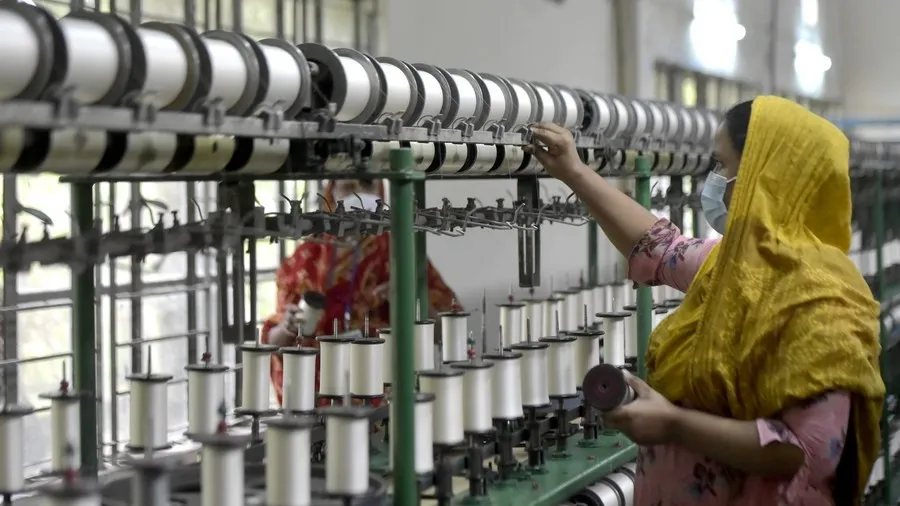
Dhaka: Bangladesh’s gas crisis, which began on July 21, is deepening across major industrial areas, forcing factories to cut production, suspend operations and send workers on leave, according to a report by The Daily Star.
The situation worsened after Excelerate Energy’s LNG terminal shut down after running out of inventory on Wednesday, further tightening gas supplies to the national grid. With a large share of available gas being consumed by power plants, industries dependent on gas for boilers, production processes and captive power generation are facing severe shortages.
The crisis has affected textile, garment, steel, glass, food-processing and other gas-intensive industries. Several factories have been forced to switch from gas-fired systems to more expensive fuel alternatives, significantly increasing operating costs.
More Than 100 Textile Factories Halt Production in Narsingdi
Narsingdi has emerged as one of the worst-affected industrial areas. More than 100 textile factories reportedly halted production over the past two days after gas pressure dropped to almost zero.
Factory owners said gas pressure, which is normally around 15 pounds per square inch (PSI), fell to 2–4 PSI last week before dropping to nearly zero in recent days.
Nizam Uddin Bhuiyan, president of the Narsingdi Textile, Dyeing and Printing Association, said the district supplies nearly 70 percent of Bangladesh’s clothing.
Garment Industry Faces Heavy Production Losses
Garment factories in Gazipur, Narayanganj and Savar are also struggling with inadequate gas supplies. Several factories are dividing workers into shifts to keep operations running, resulting in production losses estimated at around 20–25 percent.
Factories that normally use gas-powered generators are increasingly turning to fuel oil. This has reportedly pushed power-generation costs up by nearly five times.
The disruption is also creating pressure on factory owners, who must continue paying workers even when production is reduced or completely halted. Delays in production and supplies are raising concerns over export shipment schedules and the possibility of costly air freight.
Workers Sent on Leave in Bhaluka
The gas shortage has also disrupted industrial activity in Mymensingh’s Bhaluka industrial zone. Workers at around 20 factories were partially sent on leave.
Of the 293 factories operating in the area, 99 are gas-powered, and almost all are currently facing shortages, according to Industrial Police-5 Superintendent Md Ansar Uddin.
Titas Gas officials said pressure in the area’s two gas pipelines has fallen sharply, from around 140 PSI and 50 PSI to between 30 and 50 PSI.
Chattogram Industries Operating Below Capacity
Industrial units in Chattogram are also feeling the impact. Factories in the Chattogram Export Processing Zone, Karnaphuli EPZ, Bayezid and Kalurghat are reportedly operating well below capacity because of extremely low gas pressure.
Industry leaders have warned that if the shortage continues for an extended period, factories could face further production losses, shipment delays and growing financial pressure. There are also concerns that prolonged disruption could trigger labour unrest, work stoppages and protests.
Morshed Sarwar Sohel, vice president of the Bangladesh Knitwear Manufacturers and Exporters Association, said the crisis was affecting not only factory owners but also workers and the wider national economy.
The worsening gas shortage has therefore emerged as a major challenge for Bangladesh’s industrial sector, with businesses facing rising energy costs, declining production and growing risks to export commitments.