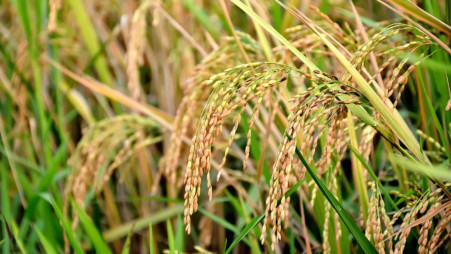

Coalition for GM-Free India Slams Unlawful Release of Genome-Edited Rice Varieties, Cites Health and Environmental Risks
New Delhi, May 6, 2025: The Coalition for a GM-Free India has accused the Central Government of unlawfully releasing two genome-edited rice varieties, Kamala (DRR Dhan 100) and Pusa DST Rice 1, on May 4, 2025, without mandatory safety testing, alleging violations of the Environment Protection Act, 1986, and Supreme Court orders from July 2024. The coalition claims the move, driven by corporate lobbies, endangers consumer health, the environment, and India’s rice gene pool diversity, while compromising seed sovereignty.
Developed by the Indian Institute of Rice Research (ICAR-IIRR), Hyderabad, and the Indian Agricultural Research Institute (IARI), Delhi, respectively, the varieties were created using CRISPR/Cas9-based Site-Directed Nuclease (SDN-1) technology. Promoted for higher yields and drought tolerance, these varieties are exempt from biosafety regulations under a 2022 deregulation of SDN-1 and SDN-2 techniques, which the coalition deems illegal.

Legal and Scientific Concerns
The coalition argues that gene editing falls under the definition of genetic engineering as per the 1989 Rules of the Environment Protection Act, which includes techniques like gene deletion and modification. “The deregulation of SDN-1 and SDN-2 is outright illegal, as gene editing is clearly covered under these statutory rules,” the coalition stated. They cited the Supreme Court’s July 2024 orders, which mandated stringent oversight of genetically modified organisms (GMOs), claiming the release constitutes contempt of court.
Scientific evidence, including a 2020 study by Sukumar Biswas, highlights the imprecision of CRISPR/Cas9 in rice, showing unintended mutations like large DNA insertions and deletions that could alter non-target genes. A 2022 paper by Chu P et al. further notes that undetected DNA damage from gene editing requires advanced long-read sequencing, which is rarely conducted. “These unintended mutations can produce new proteins with unknown health and environmental consequences, potentially toxic or allergenic,” the coalition warned.
The coalition also disputes claims that SDN-1 and SDN-2 are free of foreign genetic material, noting that these techniques can unintentionally introduce foreign DNA, which goes untested under current deregulation. This lack of biosafety scrutiny, they argue, poses irreversible risks to consumers and ecosystems.

Threat to Rice Diversity and Trade
India, a global center of rice diversity, risks losing its native gene pool, critical for climate adaptation and food security, due to the introduction of these varieties. “The release threatens our trade prospects for non-GM rice varieties, which are in high demand globally,” the coalition said, emphasizing that India’s surplus rice production does not justify the environmental and health risks of monoculture.
The coalition further criticized the government for prioritizing proprietary technologies under intellectual property rights (IPRs), which could undermine farmers’ seed sovereignty. “The government must transparently disclose the IPR status of these varieties and justify the use of public resources on technologies that benefit corporate interests,” they demanded.
Call for Action
The Coalition for a GM-Free India has demanded the immediate withdrawal of Kamala and Pusa DST Rice 1 and a halt to their cultivation until independent, long-term safety testing is conducted. They also called for public disclosure of the development process and safety data, arguing that the lack of transparency violates public interest. “These varieties must undergo rigorous, multi-year, pan-India trials to verify claims of yield and resilience, with input from farmers and field experts,” they stated.
The group vowed to mobilize public-spirited scientists and citizens to resist the release, warning of legal challenges and public protests. “The government’s unscientific and irresponsible approach will face strong opposition, as it did with transgenic GM crops,” the coalition asserted, referencing past campaigns against Bt crops.

Government’s Stance
Union Agriculture Minister Shivraj Singh Chouhan, who unveiled the varieties, hailed them as a milestone for sustainable agriculture, claiming they boost yields by 20-30%, reduce water use, and lower greenhouse gas emissions. The Indian Council of Agricultural Research (ICAR) maintains that SDN-1 and SDN-2 varieties, free of foreign DNA, are exempt from biosafety regulations under the Environment Protection Act, as they resemble naturally occurring mutations.
However, the coalition counters that this exemption is based on an “unscientific rationale” and ignores evidence of genetic imprecision. They urge the government to strengthen regulations, aligning with global standards like the European Union’s 2018 ruling, which subjects gene-edited crops to strict GMO oversight.
Conclusion
The release of Kamala and Pusa DST Rice 1 has sparked a heated debate over India’s biotechnology policies, pitting promises of agricultural innovation against concerns over safety, sovereignty, and environmental sustainability. As the Coalition for a GM-Free India prepares to challenge the government’s actions, the controversy underscores the need for transparent, science-based regulation to protect India’s agricultural heritage and public health.