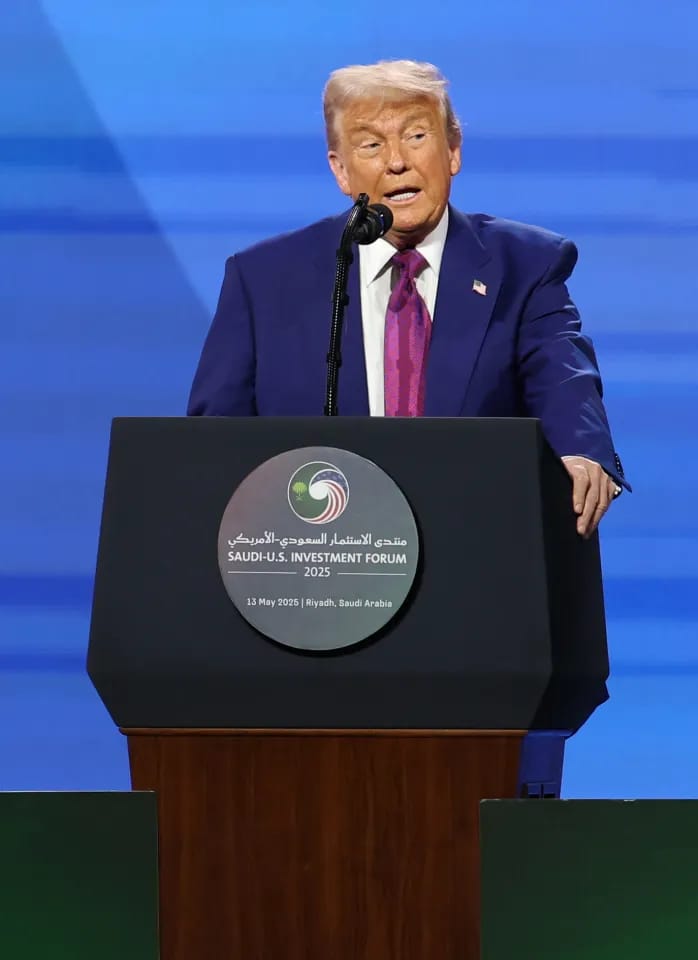

Trump’s Claim of Averting India-Pakistan Nuclear War Stirs Controversy
New Delhi, May 14, 2025: US President Donald Trump’s assertion on Tuesday that he single-handedly prevented a nuclear war between India and Pakistan has triggered intense debate, with many questioning its implications for India’s sovereignty. “I stopped a war between India and Pakistan by telling both nations they couldn’t trade with us if they fought. That’s how I prevented a nuclear war,” Trump claimed during a statement coinciding with heightened India-Pakistan tensions. The remark has left Indians divided—should they welcome the de-escalation or view it as an infringement on India’s autonomy?
The statement follows India’s response to the recent Pahalgam terrorist attack in Jammu and Kashmir, which prompted the launch of ‘Operation Sindoor.’ In a Monday evening address, Prime Minister Narendra Modi underscored national unity in supporting the operation, stating, “We gave our armed forces full freedom to eradicate terrorists. Every terrorist now knows the consequences of attacking our sisters and daughters.” He emphasized, “Terrorism cannot coexist with dialogue or trade. Water and blood cannot flow together.”


Operation Sindoor and Ongoing Threats
Operation Sindoor targeted Pakistan-backed terrorist networks following the Pahalgam attack, which India claims was a decisive blow to terror groups. Modi asserted that India had brought Pakistan to its knees. However, Pakistan prematurely declared victory, while terrorists like Masood Azhar and Hafiz Saeed continue to issue threats from Pakistani soil.
Recent incidents highlight the persistent challenge. On May 12, three Lashkar-e-Taiba terrorists were killed in a firefight in Shopian, Jammu and Kashmir. On May 8, Indian forces neutralized seven Jaish-e-Mohammed infiltrators in Samba district. These recurring attacks raise doubts about whether terrorism can be fully eradicated and if India can guarantee no further loss of life, despite Modi’s assurances.

Sovereignty Under Scrutiny
Trump’s claim that he halted a nuclear conflict by leveraging trade threats has sparked concerns about India’s sovereign decision-making. Critics argue that it portrays India as yielding to external pressure, undermining its strategic autonomy. “Pakistan may have paused hostilities due to India’s military superiority, but Trump’s narrative suggests he dictated terms, which is unacceptable,” a security analyst remarked. The statement has fueled discussions on whether India should celebrate the averted crisis or resent the perceived interference.
Media Bans and Freedom of Expression
In response to the Pahalgam attack, India banned Pakistan’s official X account, along with those of several Pakistani journalists and the defense ministry, citing misinformation about Kashmir. Sixteen Pakistani YouTube channels, including one run by former cricketer Shoaib Akhtar, and multiple OTT platforms were also blocked under the Information Technology Act, 2021.
Controversially, the Indian news website ‘The Wire’ was also blocked, prompting criticism from CPI leader D. Raja and Internet Freedom Foundation’s Apar Gupta, who called the move unjust. The government has also debunked fake news, such as reports of a suicide attack in Rajouri and a drone attack in Jalandhar, clarifying them as fabricated through the Press Information Bureau (PIB).
Responsible Expression and Public Role
While the Indian Constitution’s Article 19(1)(a) guarantees freedom of speech, the government has urged restraint during sensitive times. Reckless social media posts can threaten national security and public order, officials warn. Citizens are encouraged to verify information via PIB updates and avoid sharing unverified content that could incite panic.
As India confronts ongoing terror threats and navigates foreign claims of influence, the public is urged to support soldiers’ families, especially those who have lost loved ones. With fake news and cross-border provocations persisting, India faces the challenge of balancing its sovereignty, security, and global diplomacy while fostering unity and vigilance at home.