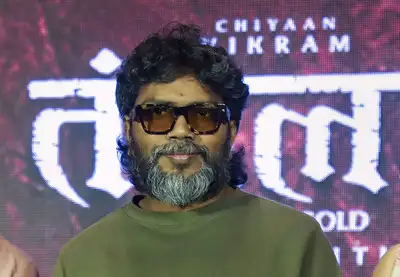

Pa. Ranjith: From Humble Beginnings to Championing the Marginalized in Indian Cinema
Varun Mourya
– In Tamil cinema, where commercial blockbusters often dominate, director Pa. Ranjith has carved out a distinct identity as a filmmaker who turns personal experiences of caste discrimination into compelling cinematic narratives. Through films such as Kabali, Kaala, Sarpatta Parambarai, and the recent Thangalaan, Ranjith has combined entertainment with strong socio-political commentary, giving voice to marginalized communities and challenging entrenched social hierarchies.

Childhood Struggles That Shaped a Vision
Born on December 8, 1982, in Karalapakkam near Chennai, Ranjith grew up in a modest family of agricultural laborers. As the middle child among three brothers, he faced stark realities of caste-based exclusion. From being pushed off a village banyan tree platform to having coins thrown back at him in shops, and even being denied food at communal feasts, these humiliations left a lasting impact. His father explained it simply: “We are untouchables.”
“These queries turned into my films,” Ranjith has said, pointing out that his art is inseparable from his lived experiences.

Education and Awakening
Despite hardships, Ranjith excelled in school, where teachers often shared meals with him—offering him dignity denied elsewhere. By high school, he immersed himself in the writings of B.R. Ambedkar, Periyar, and Malcolm X, which shaped his worldview.
Financial struggles forced him to pause his studies and take up work as a farm laborer and signboard painter. After saving for two years, he enrolled at the Government College of Fine Arts, Chennai. Exposure to global literature like Roots by Alex Haley and One Hundred Years of Solitude by Gabriel García Márquez, alongside films such as Children of Heaven and Life is Beautiful, sharpened his artistic sensibilities. Drawing parallels between African-American struggles and Dalit realities, Ranjith resolved to use cinema as a tool for social change.

A Breakthrough in Tamil Cinema
Ranjith began as an assistant director to Venkat Prabhu on Chennai 600028 (2007). His directorial debut, Attakathi (2012), a low-budget romantic comedy made on ₹1.75 crore, earned triple returns and marked Tamil cinema’s first authentic portrayal of Dalit life.
His next film, Madras (2014), starring Karthi, explored North Chennai’s political landscape and won him the Best Director Award at the Vijay Awards. Collaborating with Rajinikanth on Kabali (2016) and Kaala (2018) was a milestone. Both films, infused with Ranjith’s socio-political commentary, became commercial and critical successes. Kaala made history as the first Indian film released in Saudi Arabia and later featured in the British Film Institute’s “25 Films of the 21st Century” (2024).
He followed this with Sarpatta Parambarai (2021), a gripping boxing drama on Amazon Prime Video; Natchathiram Nagargiradhu (2022), which dissected love and politics; and Thangalaan (2024), starring Vikram, which cemented his national stature.
Through Neelam Productions, established in 2016, Ranjith has backed impactful films like Pariyerum Perumal (2018) and Blue Star (2024), both centered on anti-caste themes.
Accolades and Recognition
Ranjith’s body of work has earned him numerous awards, including Ananda Vikatan Cinema Awards, Edison Awards, SIIMA, and Filmfare honors. His success as both director and producer highlights his enduring influence on Tamil cinema.

Recent Challenges and Advocacy
In 2025, Ranjith has several production ventures lined up, including Thandakaaranyam (September release), Bottle Radha, Bison, and the international co-production Papa Buka.
However, his directorial project Vettuvam, announced at Cannes 2022 with Arya in the lead, has been marred by controversy. In July 2025, stuntman S.M. Raju (Mohanraj) tragically died during a car chase sequence, leading to negligence charges against Ranjith and others. He was later granted bail but described the incident as the loss of “a man of unparalleled skill.” The project has also faced legal hurdles from the Madurai High Court over religious sensitivities.
Beyond cinema, Ranjith continues his activism through the Neelam Cultural Centre and the Casteless Collective, a music band promoting anti-caste art. He also provides free training, food, and accommodation for underprivileged youth in Chennai, striving toward a caste-free society. Recently, he emphasized the importance of working-class communities in shaping Chennai’s cultural identity.
A Journey Beyond Cinema
From a childhood scarred by caste discrimination to becoming a leading voice for the oppressed through cinema, Pa. Ranjith’s journey is one of resilience, creativity, and conviction. Despite setbacks, his mission to blend artistry with activism continues to inspire millions and redefine the role of cinema in shaping society.