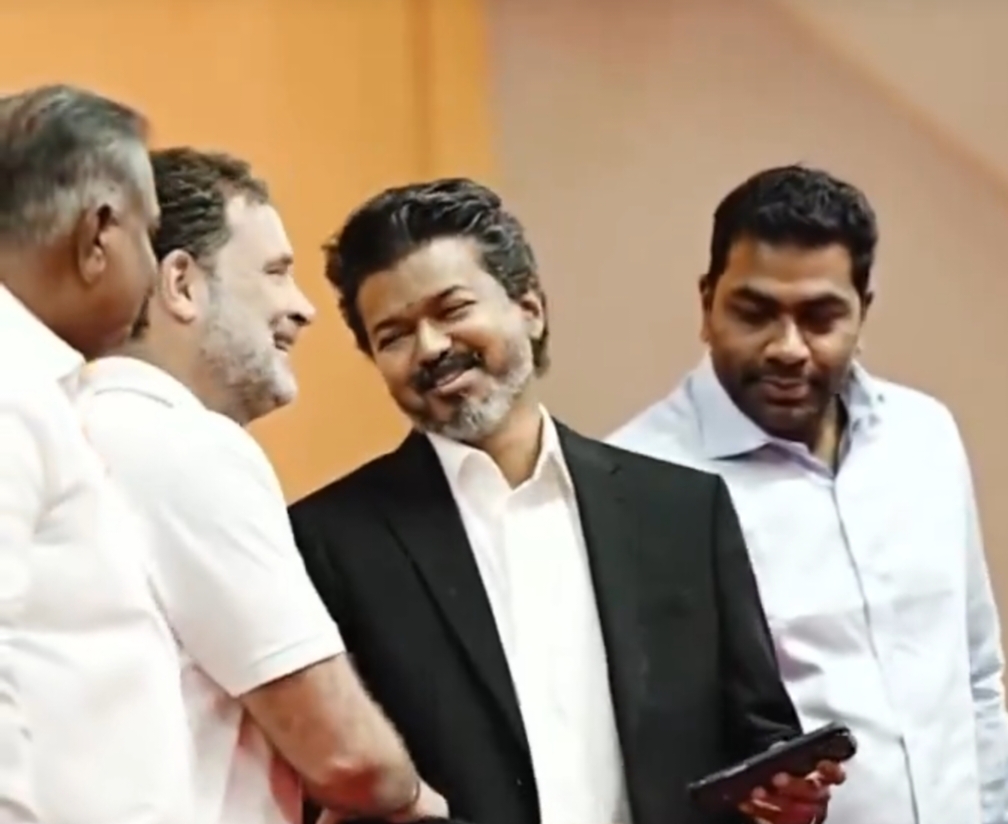

Rahul–Vijay Reel Row Triggers National Debate Over Social Media Censorship
Chennai/New Delhi, May 12: What began as a celebratory social media post from Tamil Nadu’s high-profile swearing-in ceremony has now snowballed into a full-fledged political controversy, with the Congress party accusing the Centre of suppressing opposition voices through digital platforms.
The row erupted after Congress leader Rahul Gandhi shared a reel on Instagram featuring moments from the oath-taking ceremony of newly elected Tamil Nadu Chief Minister Vijay. The visuals, which captured warm interactions between the two leaders during the historic political event in Chennai, quickly gained traction online and began circulating widely across social media platforms.

However, within hours, the reel allegedly became inaccessible to several users. Congress leaders claimed that Instagram had restricted or blocked the content citing compliance with regulations linked to the Ministry of Electronics and Information Technology. The development immediately triggered outrage within the Congress camp, with party leaders calling it an attack on democratic expression and digital freedom.
The controversy deepened when Congress spokesperson Srivatsa alleged that even an Instagram Story posted in protest against the action was later removed. In a strongly worded post on X, he accused the BJP-led Central Government of misusing institutional mechanisms to limit the reach of opposition leaders online.
According to Congress leaders, the timing of the incident has raised serious questions. The reel was linked to a politically significant moment — the formation of the new Tamil Nadu government under Vijay’s leadership, backed by the Congress party and its allies. Political analysts say the visuals symbolised a new political equation emerging in the South, particularly after the Tamilaga Vettri Kazhagam (TVK) made an impressive electoral breakthrough.
The swearing-in ceremony itself had drawn massive public attention. Thousands of supporters gathered in Chennai as Vijay officially assumed office as Chief Minister, marking a dramatic transition from cinema to governance. Rahul Gandhi’s presence at the event was seen as a strong political message of solidarity between Congress and TVK at a time when opposition parties are attempting to strengthen regional alliances against the BJP ahead of future national electoral battles.

As the reel controversy gained momentum online, hashtags relating to “Instagram censorship” and “digital suppression” began trending on social media. Congress workers and supporters accused the Centre of attempting to silence content that showcased opposition unity and growing public support for regional alliances.
The Union Government, however, firmly rejected the allegations. Official sources clarified that the Centre had no role in the blocking or restriction of the content and maintained that the issue appeared to be a technical problem within Instagram’s moderation system. Government representatives stated that social media platforms occasionally face automated filtering or temporary visibility issues and insisted that no directive had been issued against Rahul Gandhi’s account.

Despite the clarification, opposition parties remain unconvinced. Congress leaders argue that the notification reportedly displayed on the account referred specifically to rules associated with the IT Ministry, raising suspicions about external intervention. They have demanded a transparent explanation from Instagram and its parent company regarding how and why the content was restricted.
The episode has once again revived concerns surrounding the relationship between governments and global social media companies operating in India. Over the past few years, debates around digital regulation, content moderation and freedom of expression have intensified, particularly in politically sensitive contexts. Critics argue that opaque moderation systems can influence public discourse, while governments maintain that regulations are necessary to prevent misuse of online platforms.
Legal experts and civil society groups have also weighed in on the issue, warning that any perception of political censorship could damage public trust in digital platforms. Several opposition leaders described the development as a “dangerous precedent” in a democracy where social media has become a primary tool for political communication and public outreach.
Meanwhile, Congress leaders hinted that the party may consider legal options if Instagram fails to provide a satisfactory clarification. Political observers believe the controversy is unlikely to die down soon, especially as Tamil Nadu’s changing political landscape continues to dominate national discussions.
With regional politics, digital freedom and opposition unity now intersecting in one controversy, the Rahul–Vijay reel episode has evolved far beyond a routine social media dispute — becoming the latest flashpoint in India’s increasingly intense digital political battle.